Hip-Hop Lives Here

Hip-Hop Lives Here
 Share
Share
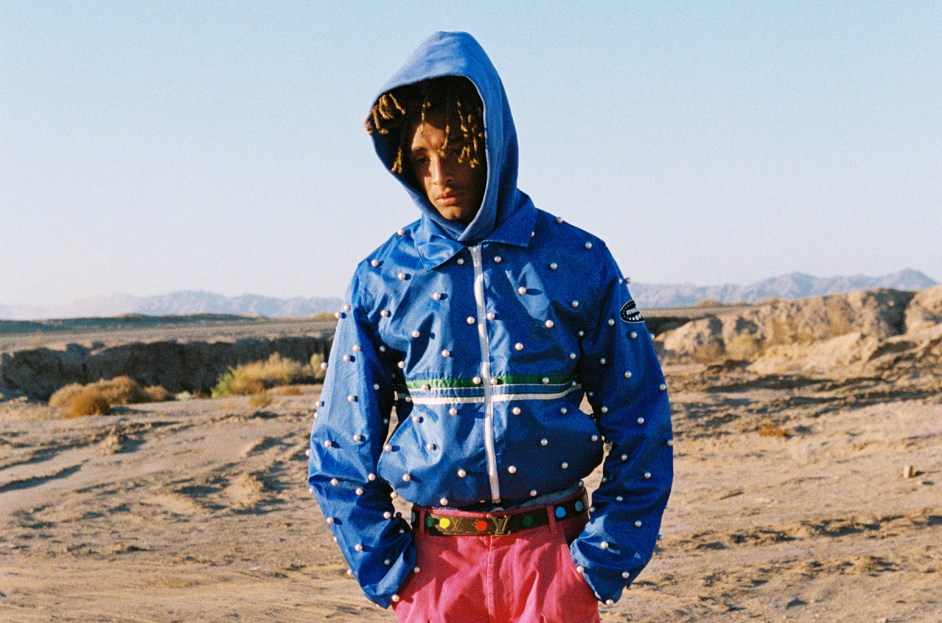
Jaden Smith is on a “rainbow swag mission,” three years since he’s released any solo music, as his recent sorrow pushed him back to the studio.
“Roses” kicked off Smith’s next era in June and he followed that up with “D.U.M.B.” on Friday (Oct. 4). Short for “Deep Underground Military Base” and built around a hypnotic chorus, Smith gets candid about his disdain for hurting those around him while trying to navigate love and manage his relationships in the digital era.
Smith will release another two songs on Oct. 18 with “Gorgeous,” a pop-leaning love letter to women, and “The Coolest Part 2,” a sequel to his signature 2012 track. The four-pack will be packaged as 2024: A Case Study on the Long Term Effects of Young Love, his first project since 2020’s CTV3: Cool Tape Vol. 3 (he released a deluxe in 2021). The vulnerable, genre-blending EP will explore “young love and really just the mental landscape of young people right now dealing in a world with social media,” according to the 26-year-old multi-hyphenate.
Smith’s relationship with model-singer Sab Zada has been the subject of plenty of social media chatter and tabloid fodder in recent months. Instead of responding to rumors surrounding his love life, however, Smith has elected to turn to music. “I don’t need to convince people of stuff as far as what’s going on with me in the world and I just put it in my music with how I feel and my experiences of what I’m going through,” he tells Billboard on a video call while walking around the woods of France as he’s in town for Paris Fashion Week.
Check out the rest of our interview with Jaden Smith as he details his upcoming mini-project, young love, his plastic furniture company and more.
Billboard: What’s inspiring you creatively these days?
Jaden Smith: Honestly, I’m so sad that it’s put me into a corner where I can’t do anything besides make music. That’s why I decided to release this next project. I kind of found my inspiration in making these mini-projects that are a couple of songs and I think kind of just put off a vibe and gets people like, “Dog, I really like this mini-pocket where he’s catching a very specific vibe for like four songs.” Then kind of moving on.
A Case Study on the Long-Term Effects of Young Love. Explain to me that title and how tough it is to put your relationship into music?
It’s just about the case study of young love and really just the mental landscape of young people right now dealing in a world with social media, dealing in a world with internet and how that changes mental health and what people are talking about doing and feeling. How that psychologically affects people long-term in ways that it didn’t past generations, because we didn’t have the technology, access to the world that we have. It’s a snapshot of that for myself.
What was your recording process with these songs?
Very long-term — songs I’ve been working on for other albums that didn’t make it and needed more time to figure out exactly what I wanted to do. This has been over the course of three or four years. Literally, the process is me f–king crying in the studio, and then like, singing in between when I can make words happen. That’s really the process. I’m going through emotional things, dealing with those experiences and feeling overwhelmed. Like I don’t know what to do, but that’s when I get into the studio.
So this is a good creative outlet for you.
Yeah, and my fans are people who go through these extremely emotional situations. Emotional people tend to like my music. That’s who I do it for.
What have you learned about young love?
That it hurts in stages, and then it’s very serious. If it’s something that lasts a long time, it can create long-term psychological effects and defects in people when they go through adulthood, then goes on to affect their generation and families. It’s just a topic of something I wanted to bring up. Every time you make a song title and an album title, you have the opportunity to bring up a topic and think about something and pop an idea into people’s minds, and that’s what I wanted to pop into people’s minds this go-around.
Is it tough when so many people can comment on your relationships and everything you have going on, even if it’s not true? How you can push back against that?
It’s not even so much you have to push back against it as much as you just have to deal with it. The way I deal with it is by making music. I don’t need to convince people of stuff as far as what’s going on with me in the world and I just put it in my music with how I feel and my experiences of what I’m going through.
In an older interview, I saw you explain how you try to tell your story without straying toward anything that could be considered misogynistic lyrics. Is that something you have to battle?
Yeah, that’s a current battle that I’m battling with myself. I just don’t like to say certain words that I don’t feel are useful for me personally. Not that I don’t like to say it, I say all different types of things in my normal life, but I just don’t like to rap it, because I know that everybody’s listening and my mom and my sister and everybody don’t say s–t. It’s a growing battle.
In the process of me making this album, this is the first time that I’ve ever gone out of my way to have girls in my music video in a way that makes sense for me and a way that I would do it, because I would always get wrapped up in the way everybody else does stuff. Now I’m starting to find the way I want to do it. I’m going through a thing, a time and a moment with me right now. I don’t even know what it is, but I feel it in the world even when I walk outside. I’m just trying to put whatever’s happening with me into the music.
I saw when you announced the project it was on your dad’s birthday. Was there anything to that?
No, I didn’t realize that. I probably should’ve thought about that.
Have you played the music for any of your family members? Is that a typical practice for you?
I have played them the songs. I usually don’t play them the music.
Let’s start with “D.U.M.B.,” which was my favorite. What was your process with that one?
That s–t is super duper old. I’m rapping about s–t that happened long ago. I went in there and I made it. I just be rapping sometimes, man. Sometimes it makes sense and I was like, “Oh, the concept of this song makes sense.” Sometimes you just receive it and it’s like, “This is already a song. All I have to do is rap on this.” It’s amazing. Sometimes you gotta really think hard and sometimes they come to you straight away. That’s what was happening with me.
“Gorgeous” is another track coming.
I wanted to make a pop song. It’s really just about my love for the opposite sex, my love for women and how that has evolved to where I am now in my life. That’s my love letter to the opposite sex and all women around the world.
What made you want to do a sequel to “The Coolest?”
I just had to remind everybody because they’ll forget. Then they’ll meet me and be like, “Yo, what the hell is this?” Remind everybody again — that’s what that was. That song’s so old. I’m glad to be back at it. It’s an awesome experience. I’m just trying to master my own mind. I’m trying to have less thoughts. I’m trying to master my thoughts.
How was working with your dad and Russ on “Work of Art”?
That was fun to do. That was tight. It was fun to perform. That was an amazing experience.
Do you have any goals for the rest of the year?
Yeah, I’m trying to get this recycled plastic furniture company off the ground. A circular economy for used trash to produce park benches or I think drywall is probably the best. Using old clothes and denim as insulation. Recycling clothes through the circular economy. Companies — that’s my biggest thing. That’s what a lot of my raps are about. Circular economy, recycling plastic.
I read you go to the movies a lot by yourself. Is that something you’re still doing?
I watch everything. I watched Beetlejuice Beetlejuice but I watch everything. Every single movie that comes into the theaters.
Is this going to develop into an album?
After I release this mini-project, I’m on a swag mission. I’m on a rainbow swag mission and I’m just trekking through. Wherever the mission takes — that’s where I’ll be. If I get this plastic furniture company off the ground, I have no idea what happens next. It all depends where the wind blows, how sad I am.
Share
Advertisement

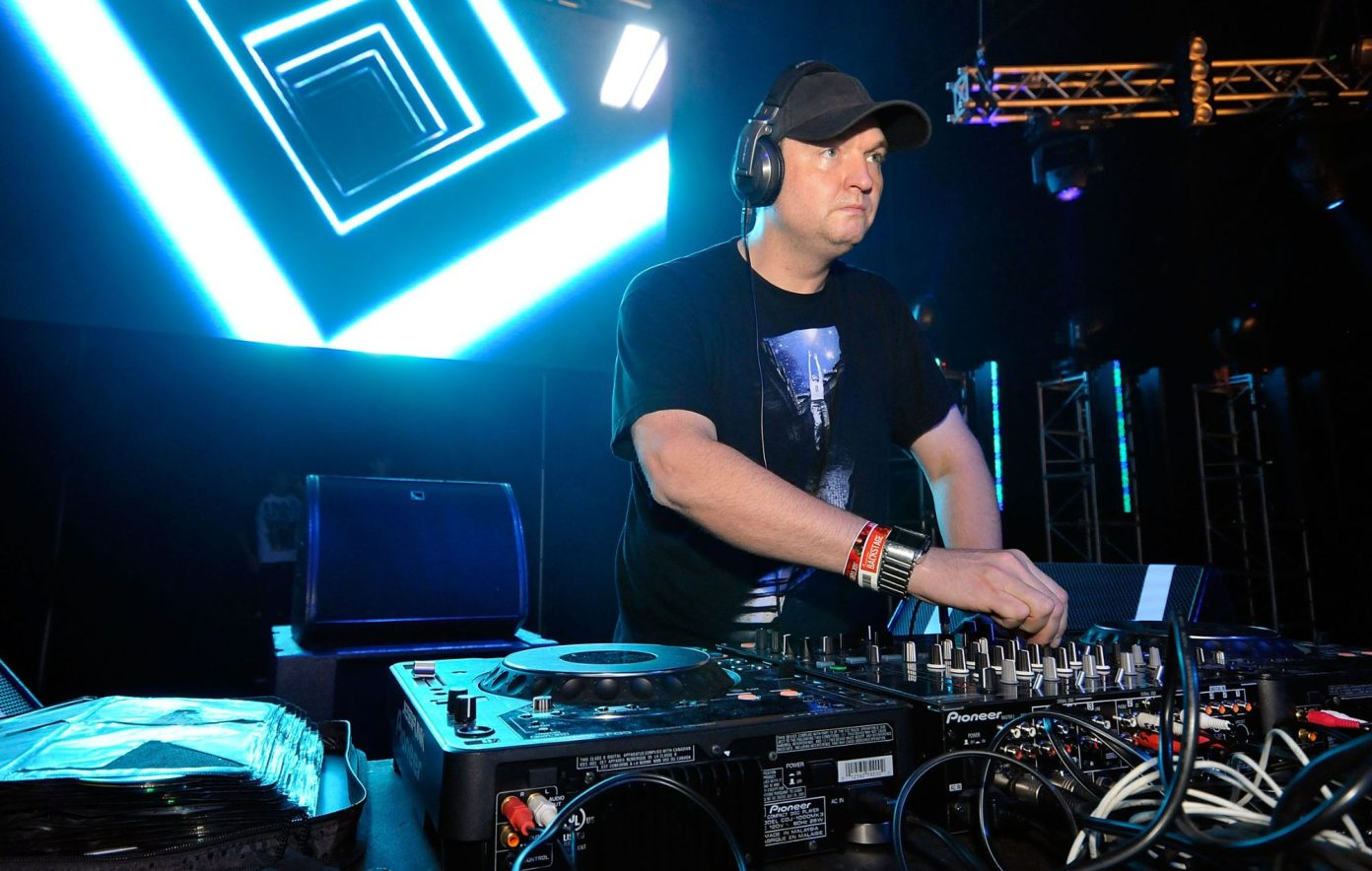
Tributes have been shared following the passing of West Coast house producer DJ Dan, who has died at the age of 57. He was remembered as a “beloved, genre defying” figure in the scene.
Confirmation of his passing came from one of his representatives on Sunday, March 29, through a statement provided to Billboard. At this time, no details about the cause of death have been made public.
“It is with profound sorrow, deep admiration, and an enduring sense of gratitude and love that we announce the passing of Daniel Wherrett, known professionally to the world simply as DJ Dan,” the statement said, also calling him “one of the most beloved, genre-defying, and genuinely influential pioneers in the history of American electronic music.”
“He leaves behind not just a discography, but a culture, a way of feeling music that touched millions of souls across four decades and five continents. He often said he felt his purpose in life was ‘to heal through music.’”
DJ Dan had been scheduled to perform at Dead Ringer in Nevada on Saturday, March 28, but fans were informed only hours before the show that it would no longer take place and refunds would be issued. In a short message posted on Instagram, organisers only said that “unfortunately DJ Dan is unable to make it tonight.”
Further comments from Wherrett’s representatives described him as “a man who saw music in colours”, adding that his DJ sets were a “vision translated into something audiences felt in their bodies long before they understood it with their minds.”
“Off the stage, he was a cook, a traveler, an obsessive record collector whose family bought him a new turntable every Christmas, not because it was tradition, but because it was the only gift he ever wanted,” they continued.
“He leaves behind his music, his label, his mixes, and the countless thousands of dancers who found themselves, truly found themselves, in the middle of one of his sets. The world is quieter today. But press play on anything he touched, and you will hear exactly why we mourn him, and exactly why we are forever grateful he was here to inspire us.”
Since the news broke, fans have been sharing messages online to honour the late DJ. One fan wrote on X, formerly Twitter: “DJ Dan made some of the first mixtapes that got me into raving when I was young. So sad to hear this news,” while another posted: “RIP to a very formative person in how I entered into all of it.”
Another tribute read: “House music helped define an entire era of my life. DJ Dan was someone who shaped so many of my friends into the DJs they become,” while someone else shared: “RIP DJ Dan. A superbly nice person, fortunate to have known him and call him a friend.” More tributes can be found below.
Born Daniel Wherrett in Washington, DJ Dan originally studied design before relocating to California in the early 1990s to fully focus on electronic music. He later helped establish the Funky Tekno Tribe and became a key figure within the West Coast underground electronic scene.
By 1998, he had recorded ‘Essential Mixes’ for the BBC, and in 2004 he reached Number One on the Billboard Dance Club Songs chart with ‘That Phone Track’. Earlier releases including ‘Needle Damage’ from 1999 and ‘That Zipper Track’ and ‘Put That Record Back On’ from 2001 also charted on the Official Charts.
Share
Advertisement