Hip-Hop Lives Here

Hip-Hop Lives Here

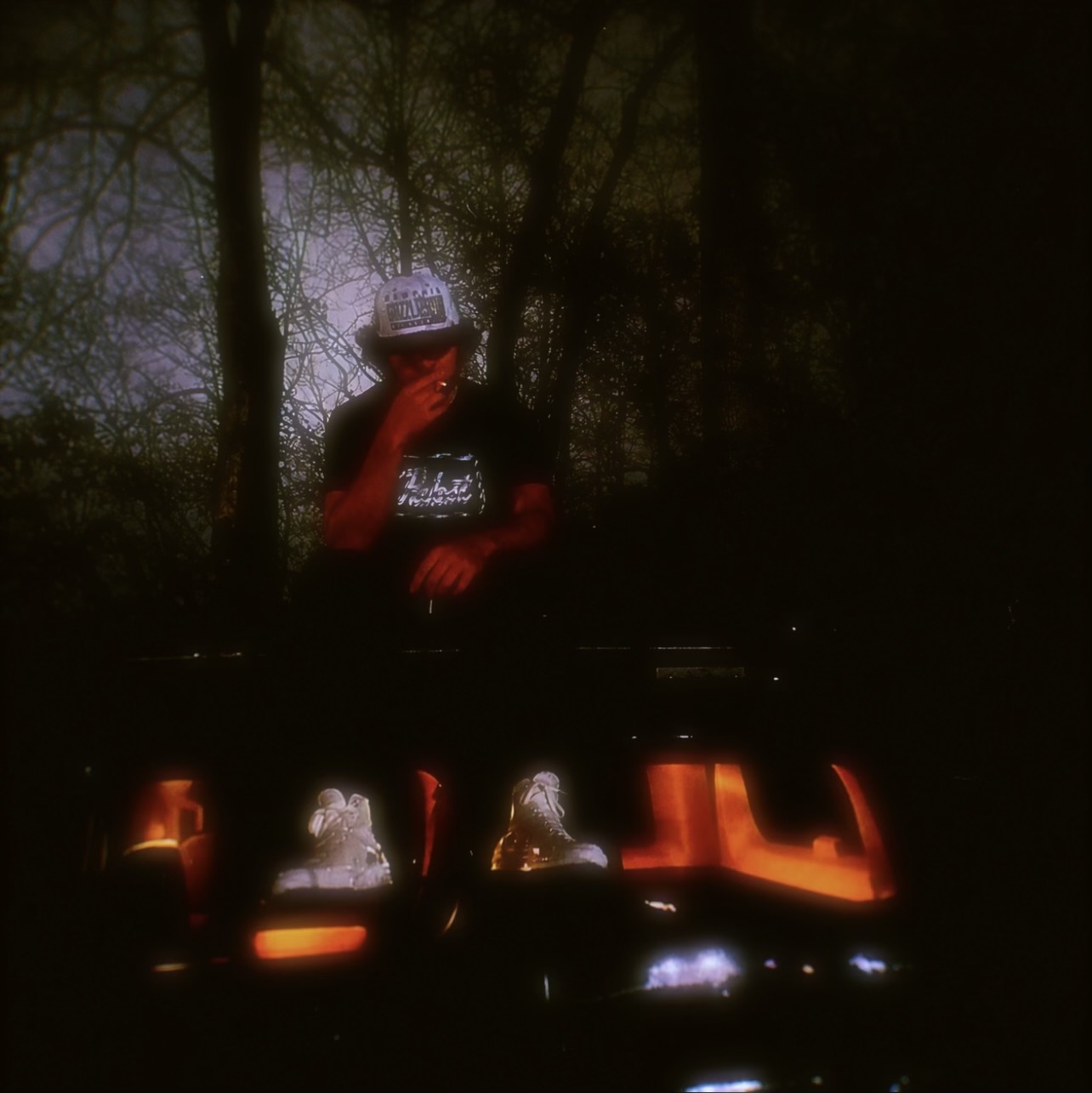
“I’m Coming,” a slow, soft, soulful track, is a song about the possibility of redemption through love and is at the same time a foray by Native American rapper Wreckless_ into R&B.
Wreckless_, the artist name for Dakota Soldier, was written for a friend during a time when Wreckless_ was going through rehab from a period of street life and drugs in Tahlequah, Oklahoma.
“That was for a girl that I really liked,” he said. “She’s always been there for me.”
This was after his baby-mama left him, “I kind of like fell apart” and fell into life on the street, which involved drugs and jail.
“And I met Fay,” he said. “She’s a really good girl. She goes to church, and she is always praying for me. She was always there for me.”
He wanted more than friendship and tried to turn the friendship into something deeper, but she didn’t want to. Eventually, he said, he fell deeply into a street life of drugs and crime, and they drifted out of contact.
“She just couldn’t do it anymore. “They usually don’t, the good ones. They won’t stick around for that stuff.”
After a year, though, he entered rehab and got clean, and one day he found a friend request from her. That is when he wrote “I’m Coming” for her.
“We started talking again, and that’s when I wrote that song. I sent it to her and she messaged me back immediately. She loved it.”
Walking down this path to a dead-end road
All exits passed, there’s no where left to go
I wanna change for you,
I want to turn around
And that is when, about a year ago, Wreckless_ got back into music. He put an underground mixtape out on social media, and it “did pretty good,” so, he decided to take the best few songs he had ready and put them out.
“I’m Coming” is one of the latest.
“They all went crazy for that one,” he said. “I played it for my counselor at rehab and she started crying. It was a good song, and I wanted to get it out there.”
Wreckless_, who comes from Cherokee and Cheyenne stock, is now 32 and has been making music since he was 16. In between relationships since then, he would “go back to the streets for a while.”
Tahlequah, pronounced TAL (rhymes with “hal”)-ih-kwah, a city of a little more than 16,000 in eastern Oklahoma, is the capital of the Cherokee Nation and the seat of Cherokee County.
“It’s a small city-town,” he said, “but we got problems with drugs. They’re bad, like methamphetamine and they have homegrown gangs there.”
Wreckless_ and his friends at one time formed a group called GMC.
“That was the name we came up with. We’d sell drugs and make music. I was pretty popular.”
During that time, the music he made was primarily hip-hop and rap.
“That was, like I said, when I was into drugs.”
Last year, he went back into rehab and music and started taking it seriously.
“I’m Coming” got the attention of Dubbo, an Austin hip-hop star of Babygrande Records, and he and Wreckless_ collaborated on some songs.
“He really liked my music, and he told me what to do if I wanted to take it serious. You know, you got to promote, and invest in yourself, and my music career has taken off.”
Dakota has turned his life “all the way around.” From the days when his family wanted him to leave Tahlequah, he has gotten sober and is now a student at Rogers State University in Claremore.
“I got friends in prison, and in their letters they were saying, ‘You got to get out of there, bro. You gonna end up in here.’”
“So, I took off and I went to rehab in Miami.” After a brief relapse, he got straight again early this year.
His goal is to make music his full-time career. He is working on an album, The Millennials, Volume 1, with 15 tracks, planned for a 2025 release.
His music is primarily rap. He does trap beats, hip-hop, and country, emo and punk rap, and now R&B.
“I like all genres,” he said. “I can do it all.”
Connect to Wreckless on all platforms for new music, videos, and social posts.
“I’m Coming,” Spotify
Linktree
Website
Spotify
YouTube
Facebook
Instagram
X
TikTok
 Share
Share
Advertisement

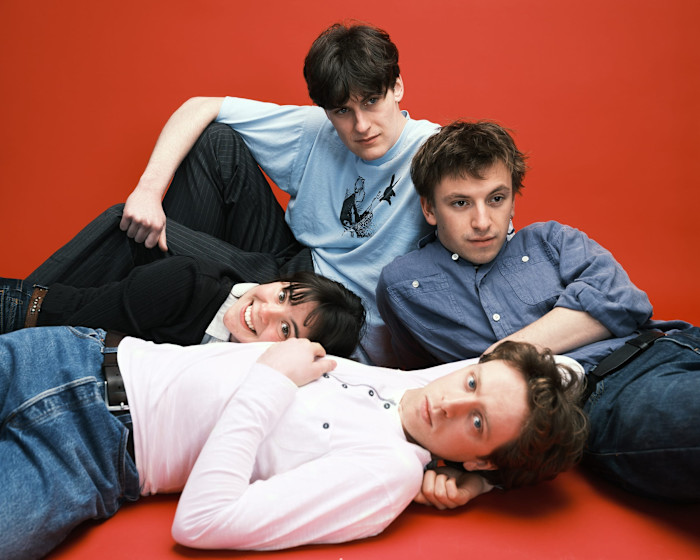
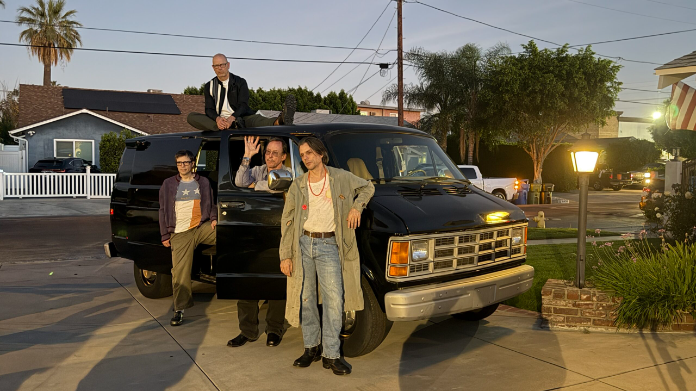
Westside Cowboy caught up with NME backstage at Reading 2026 to tell us about their whirlwind year, slapping a smile on the face of modern indie, and hopes for “weirder, poppier” new music.
Fresh from the release of their acclaimed and long-awaited debut album ‘It Goes On‘, the rising Manchester alt-country outfit packed out The Ballroom tent at both Reading and Leeds sites.
This was their first time playing the legendary festival, but singer and guitarist Reuben Haycocks came as a young punter in 2019, their return bringing bad a flood of “PTSD” from that heady weekend. This time through, they were one of the most talked-about acts of the weekend – and certainly one of our highlights.
From winning the Glastonbury Emerging Talent Competition last year to then smashing Glasto before R+L, does anything phase the recent NME cover stars anymore?
“A lot of things phase us, every day,” replied fellow singer and guitarist Jimmy Bradbury. “It’s a strange one. We have a very lovely team of people around us who help keep us sane. I feel like we’re still playing music with our friends, and that’s the way I hope it stays.”
He continued: “We’re at that stage of a tour now where we’ve been away for a very long time and we’re questioning our own existence. Is this real? Are We real?”
It’s been a whirlwind year for the NME 100 alumni, starting with supporting Geese on tour back in March when they called at London’s iconic Hammersmith Apollo. What was it like to be part of that bubble of hype and madness?
“We were sort of leeching off the bubble,” replied Haycocks. “We were very lucky to get that tour and they were so lovely. Generally the atmosphere of the whole tour was great and all the crowds were amazing. Hammersmith was the first time I ever walked on stage and noticed how big it was. We’re excited to hopefully play our songs to that many people who know them, now that the album is out.”
Bradbury agreed: “That was one of the first stages where you go out and you immediately notice and take in the history that’s been there: Springsteen’s first London concert, the last ever Ziggy Stardurst concert – which I was watching the other day and his guitar player Mick Ronson is amazing. There’s a moment where it’s really dark, the lights flash and you can see Bowie being projected onto the side of that place. It still looks the same as that and it’s an amazing venue.”

Still, the band modestly that admit that the highlight of 2026 so far has simply been putting out their debut album.
“I don’t know if we intended to go this far, but we’re here and we’re liking it,” Bradbury admitted. “There are so many different stages to putting an album together: finding which songs, recording the songs, mixing them, getting your masters back and it’s like, ‘We’ve done it!’ Then you get the cover back and it’s like, ‘We’ve done it again!’ By the time it comes to releasing it, you feel like you’ve done it already five times. It’s a moment of it finally just clicking together and it’s really exciting.”
Speaking of how it feels to finally have the record out in the universe and have listeners understand their true selves, Haycocks shared: “We’re making an effort to read reviews as little as possible, considering we’re already on tour and questioning our existence. My dad will send me a bit of a review that’s really nice, and then just to ground me he’ll send me a horrible comment, just so I don’t get above my station.”
“We’ve just played, and it was nice to see people sing the words to songs that were sort of new to us. Seeing people with their arms up in the air and knowing these songs that were once just a thought, that’s a pinch-me moment.”
The band recently told NME how their primary focus was “bringing the fun back into the music generally” and “taking everything a little less seriously” in terms of songwriting. It’s rarer than you’d hope to share joy at these hellscape times such as this, but it’s admirable. Have Westside Cowboy felt that reflected back at them?
“We could feel it today,” replied Bradbury, speaking of their Reading performance. “There were bucket hats flying off in the air, people had some lovely signs written. We try and keep it light-hearted. There are so many instances from when we’ve been in bands before where you take it so seriously that you run yourself into the ground. Everybody just really try to let go of that. We wanted to do the best we can with what we have and use as few chords as possible.”
Do they feel more new bands adopting that approach as the world continues its doom spiral?
“There are a lot of new bands that come from the scene we come from that do that amazingly: there’s Pushbike, Bramwell, Holly Head, countless, countless bands that have that idea woven in,” said Haycocks. “It’s really lovely to see bands smiling on stage again. Maybe it was a little fashionable to be smouldering for a while.”
We briefly pause the interview to give us their best ‘blue steel’ smoulder. Their attempt gets points for effort.
“Some people can do that really well, and there are some bands I really love that can do that, but most people – especially those who are similar to us – just look like idiots,” Haycocks continued. “It’s nice to see people smiling and looking like they’re enjoying themselves. This should be the thing they want to do, so show it.”

It may seem a selfish question given that they’ve just dropped one of the year’s best-reviewed albums, and we ask only because we know how restless and unstoppable they are, but are Westside Cowboy already at work on album number two?
“We were driving down to London when the album came out at midnight. We all stood up, shook each other’s hands as the van was moving and went, ‘Cool, we’ve got until we get to the hotel then we’ll start thinking about the next one’,” Bradbury told us. “We’ve got a few things floating around, and we’re excited to crack on with it. We’ve been nattering about it in the van a lot. We’ll kick it around a bit and see where we end up.”
Asked where they were looking to take their sound from here, Haycocks shared: “Currently, we’ve been really, really loving a band called Women, we’ve been listening to loads of The Magnetic Fields and we love The Drums, so we would hope that the next album is both poppier and weirder. You never, ever know how it’s going to turn out until you start doing it.
“We want to just continue the journey that we’ve done from the start. The way I described it to Paddy [Murphy, drummer] the other day was that ‘The mists were appearing’. You can’t quite see it yet, it’s not yet tangible what the second album will be but there’s a faint outline there.”
He added: “You describing us as ‘restless’ is a good descriptor. We really just want to get on it and go.”
‘It Goes On’ by Westside Cowboy is out now, with the band heading out on their biggest UK and European headline tour to date this autumn. Visit here for tickets and more information.
Check back at NME here for all the latest news, reviews, photos, interviews and more from Reading & Leeds 2026.
Share
Advertisement