Hip-Hop Lives Here

Hip-Hop Lives Here
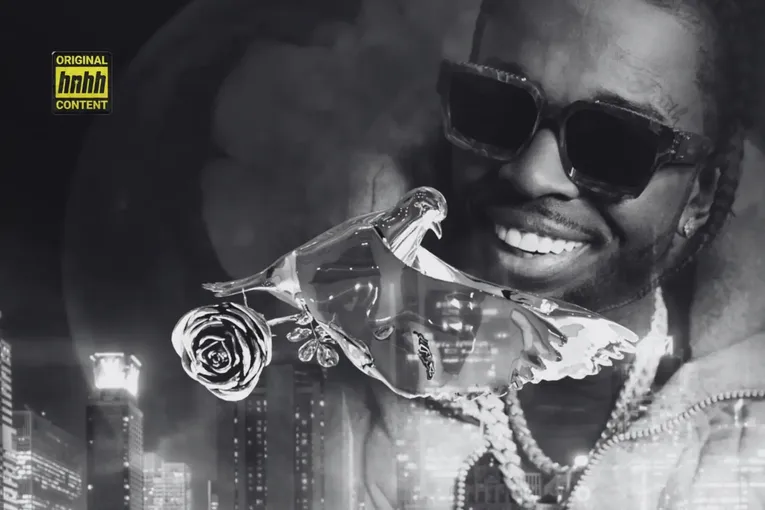
While Pop Smoke didn't invent Brooklyn drill, he became its global ambassador. New York rap has long relied on singular figures to reclaim its dominance—A$AP Rocky and Joey Bada$$ revived its golden-age aesthetics, while Bobby Shmurda tapped into drill's raw energy early on. But as Brooklyn drill took shape, merging influences from Chicago and London, it was Pop Smoke who transformed it into a worldwide phenomenon.
Every few years, an artist emerges as a clear contender for the throne. When Pop Smoke stepped out of Brooklyn’s shadows with “Welcome to the Party,” it felt like an earthquake shaking the rap game. That summer, the song led the way for New York’s drill movement, and Pop Smoke’s presence rippled through hip-hop. His affiliation with Steven Victor placed him on stage during Pusha T’s set in New York, cementing his rising influence in front of his hometown. Then came “Dior,” a track that put his gruff, raspy delivery into a new context—one that was as confrontational as it was cool and collected.
That success was no accident. Pop Smoke’s artistry wasn’t just about making anthems; it reflected a cultural shift. The streets gravitate toward voices that articulate struggle while envisioning the success that follows sacrifice. While his early material was rooted in hyper-local beefs, he carried himself with the invincibility of a rap superstar. Aspirations of luxury and power became central themes in his music, setting him apart from his Brooklyn drill counterparts. That’s why “Dior” felt like an anomaly—it cut through drill’s bleak realities with the extravagant lifestyle that success afforded him. Designer brands, flashing lights, and financial freedom were all woven into his narrative, a perspective that broadened drill’s appeal beyond its raw origins.
Hip-hop’s political undertones have been present since its inception, and even songs that don’t seem inherently political can take on new meanings in cultural movements. Future’s “March Madness,” for instance, became a protest anthem despite its unrelated lyrical content. Similarly, “Dior” soundtracked Black Lives Matter demonstrations following George Floyd’s death. Protesters chanted its lyrics in the streets, its pulsating drill beat and commanding delivery transforming into a symbol of defiance, freedom, and respect. Even after his passing on February 19, 2020, Pop Smoke’s music resonated with the disenfranchised, echoing the voices of those who shared similar struggles.
That ability to connect with both the streets and a broader audience hinted at something greater—he wasn’t just a drill rapper; he was becoming a generational voice. His ability to navigate multiple worlds—balancing Brooklyn’s rawness with high fashion’s allure, blending street anthems with mainstream appeal—positioned him as a generational talent. His posthumous debut album, Shoot for the Stars, Aim for the Moon, released in 2020, reflected that vision. With 50 Cent’s executive production, the album bridged gaps between the streets and the charts, incorporating melodic elements that hinted at a trajectory similar to 50’s own. Songs like “For The Night” and “The Woo” showcased a versatility that extended beyond drill’s aggressive bravado, proving he was evolving into a global artist.
 Share
Share
Advertisement

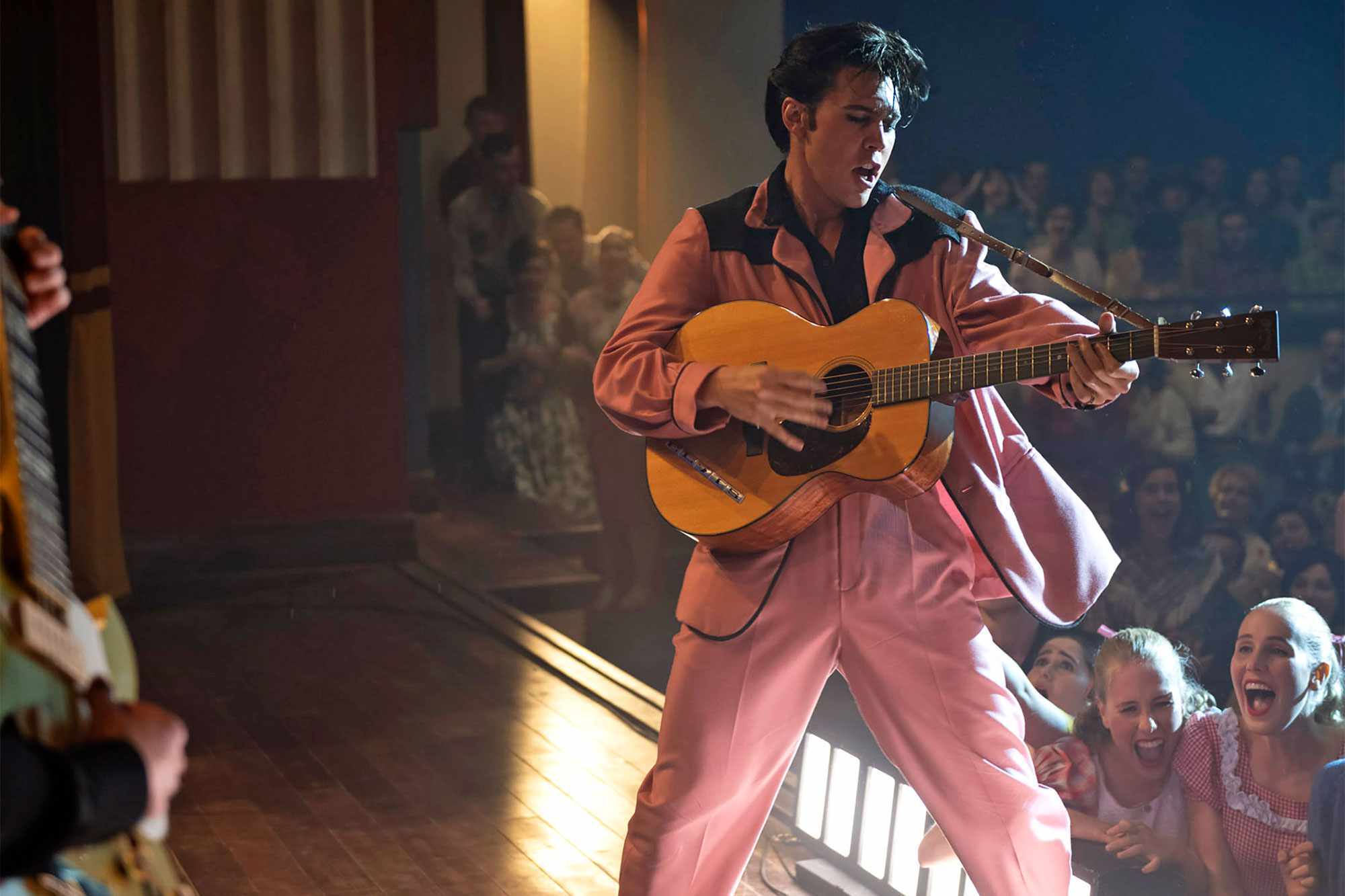
Paul McCartney has reflected on the unforgettable day The Beatles met Elvis Presley, calling it one of those surreal “pinch yourself” moments.
McCartney and the rest of The Beatles famously crossed paths with Presley just once in 1965, when they visited his Los Angeles home during a meeting arranged by NME writer Chris Hutchins.
Now, during a new appearance on BBC Radio 2’s Tracks Of My Years, McCartney looked back on the legendary encounter and shared his memories of the late rock and roll icon.
“He was really great. He was a very handsome guy, but we kind of knew that. We were fans.
“We just followed everything he did, and we looked at any photo we could get. He wasn’t a disappointment at all,” McCartney said.
He went on to explain that over the years he and his former bandmates, including Ringo Starr, have often discussed the meeting, although everyone seems to remember parts of it differently.
“I say that we rang the doorbell and Elvis came to the door and said, ‘come in guys’,” he recalled. “He invited us in and we sat around and he had a jukebox, and played ‘Mohair Sam’, the record.
“Ringo says he didn’t come to the door, we went in and he was sitting there. So who’s right? I am,” he joked.
McCartney described the evening as a special experience and remembered Presley casually picking up a bass guitar during the visit.
“He had a bass there and he was talking about the bass so we could talk, sort of, bass talk. He was great, very personable, very nice.
“He had a bunch of his minders with him, and you read stuff later, and I think they were mainly his cousins, his gang.”
The Beatles legend also remembered meeting Priscilla Presley, describing that part of the night as another standout memory.
“You’re inviting four guys into your home, probably the last thing you need is them to be all over your wife.
“It was great, she was great, Elvis was great,” he continued, before adding: “You pinch yourself. I met, I actually sat with, like I’m sitting with you, Elvis.”
McCartney has previously named Presley as one of the major inspirations behind The Beatles’ landmark album ‘Sgt Pepper’s Lonely Hearts Club Band’.
In other news, McCartney is preparing to release his new album ‘The Boys Of Dungeon Lane’ on May 29. The project has already been previewed with tracks including ‘Days We Left Behind’ and ‘Home To Us’, which marks his first official duet with Ringo Starr.
Ahead of the release, McCartney was also interviewed by actor Paul Mescal, who is set to portray him in the upcoming Beatles biopic series.
Currently titled The Beatles – A Four-Film Cinematic Event, the movies have been written by Jez Butterworth, Peter Straughan and Jack Thorne. The cast includes Mescal as McCartney, Harris Dickinson as John Lennon, Joseph Quinn as George Harrison and Barry Keoghan as Ringo Starr. The films are currently scheduled for release in April 2028.
McCartney later joked about Mescal taking on the role during his recent appearance on the final episode of The Late Show. After performing ‘Hello, Goodbye’ with host Stephen Colbert before symbolically turning off the lights inside the Ed Sullivan Theatre, he was asked which of them was more attractive.
McCartney smiled, pointed to himself and answered: “Me.”
After the audience reacted with applause and laughter, he quickly clarified that he was joking, adding: “No, he’s very cute, he’s very cute.”
Elsewhere, McCartney has also recently spoken about struggling to understand what songs Bob Dylan was playing during a concert, why he dislikes taking selfies, and why he still finds much of influencer culture confusing.
Share
Advertisement