Hip-Hop Lives Here

Hip-Hop Lives Here
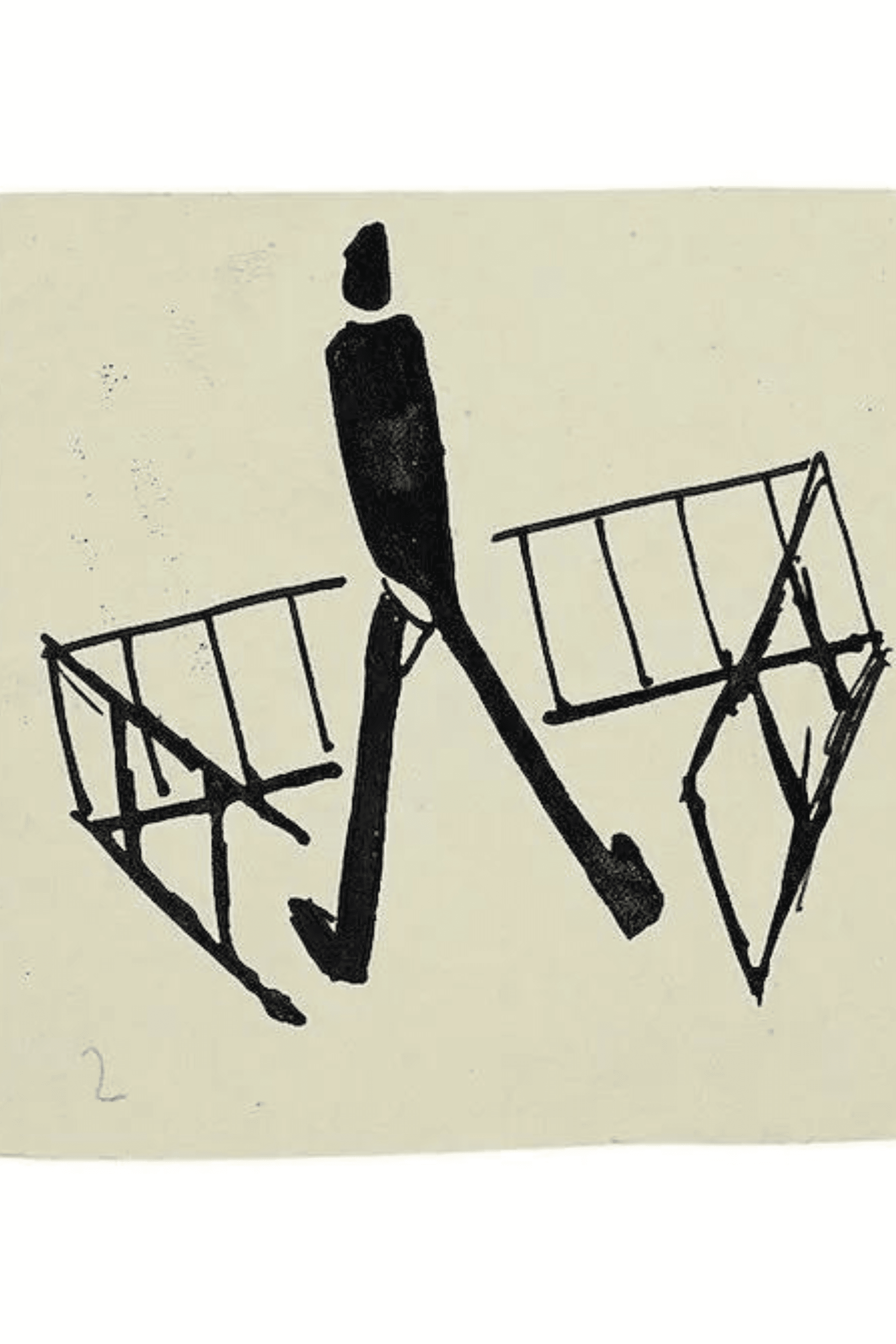
Philadelphia producer Eev Frances has covered a lot of ground in four years. A given Frances track might be built out of rave stabs, Memphis-style beats, or Merzbow-grade noise blasts, any one of them looped and compressed into a blunt-force instrument; her more elaborate productions have taken the form of brooding post-dubstep, yearning shoegaze gabber, and misty-eyed jungle. No matter the style, the common denominator has been an omnipresent patina of damage: blown out, bitcrushed, and bristling with distortion, as though her DAW were buckling beneath the surfeit of ideas.
Frances’ new release, Sometimes I Forget to Breathe, marks a shift. The outlines of her music are more vivid—the beats have sharper teeth; the melodies glint like the backs of dolphins. If her early work often seemed like a kind of primordial soup, the new record fast-forwards a considerable distance through her music’s evolution. So long, protozoa: Here we see the creature fully formed, striding confidently into the wilderness.
It’s not just that the music sounds more polished; everything about it is more intricate, more carefully thought out. One influence looms large: the hyperkinetic blasts of late-’90s and early-’00s IDM. The opening “Pistol Whip (Demo)” is a riot of barely restrained energy. A furious drum’n’bass rhythm assembles itself out of clattering cutlery; calming pads keep the mood placid while the bassline tangles itself into increasingly contorted shapes. There’s something almost cartoonish about the squelchy textures and crystalline tone colors, but the giddiness is tempered by a more downcast undercurrent. As the track builds, the melodies grow hydra-headed, branching into contrapuntal chaos. It’s an unabashed homage to golden-age Squarepusher, but it holds its own in its sheer depth of feeling.
A similar palette and stylistic sensibility carry across most of the record. “Burstintotears” spends its first three minutes tossed by a wistful chord progression that lurches like butterflies in the stomach; a tinny crash cymbal announces a climactic drop and the arrival of a rushing, reassuring kick drum. (The title is self-explanatory.) “Blistex” is an atmospheric sketch for burbling synths; “Bala Cynwyd” channels them into a spring-driven electro anthem festooned with lush pads, metallic delay, and another bassline so squelchy it practically leaves soggy footprints where it lands. Frances’ music, despite the blasted surfaces and often breakneck pace, has always had an unabashedly emotive bent, and here she puts her feelings front and center. Suffused in video-game bleeps and chords that refuse to neatly resolve, it’s nostalgic and hopeful all at once.
Sometimes I Forget to Breathe is the most synth-heavy record Frances has released so far; she says that most tracks began as generative MIDI basslines—that is, sequencer patterns with randomized variables—that she would let run for an hour before selecting the highlights and building out from those. That freeform sensibility is the source of an evident freedom—rather than looping in predictable ways, the music tends to soar from peak to peak. But sometimes the momentum gets away from her. Five of the album’s tracks are over seven minutes long, yet most of them would feel equally effective at half the length. And not everything hits the emotional highs that the best tracks do. “Play Pretend” attempts to cross the surging rhythms of “Pistol Whip (Demo)” with the plangent pads of “Burstintotears,” but it never quite clicks; it feels pulled in competing directions.
The Phoenecia-like blast of “Body Double” and the sullen dub techno of “Space Heater” are better, if nonetheless a little bit confused; you can tell that she’s feeling her way toward something. It might be an idea about texture, or shape, or the way certain sounds can apply a protective layer between feeling and expressing. Maybe she doesn’t know yet, either. But you can hear her trying to figure it out. Sometimes I Forget to Breathe feels like a leap into the unknown, and for someone so early in their career to be making a leap as great as this is exciting.
 Share
Share
Advertisement


De La Soul’s tenth studio album is built around a steady and unwavering mission: to honour the life and legacy of founding member David Jolicoeur (also known as Trugoy The Dove) after his heartbreaking death in 2023. Speaking with NME earlier this year, MC Posdnuos remembered what Jolicoeur’s family told them at the funeral: “If y’all stop, Dave stops. We’re not putting necessary pressure on you, but we would love to see y’all continue on.”
The fact that De La have not shared a release since their Grammy winning 2016 album ‘And The Anonymous Nobody’ makes it clear that they only speak when they have something meaningful to offer. With so many layered emotions around grief, reflection, and legacy rising to the surface, this moment feels right for such a powerful return.
Drawing together an impressive gathering of talent, including iconic hip-hop figures like Nas, Slick Rick, Q-Tip, Pete Rock, Black Thought, and DJ Premier, all acknowledged in an extended opening roll call, Posdnuos and Maseo aim to craft an experience that fully pulls you in. With poetry and spoken word woven throughout, sweeping orchestral touches, and a clean, grounding narration from actor Giancario Esposito, ‘Cabins In The Sky’ attempts to capture the long process of facing Jolicoeur’s absence while firmly insisting on his lasting presence, expressed through lines like “When its Pos and Maseo you see, the magic will always remain three” (‘YUHDONTSTOP’).
One of the album’s most emotional moments arrives on ‘Different World’, which features poet Gina Loring and showcases some of Pos’ most exposed and heartfelt writing to date. Blending internal rhymes with a gentle flow that pulls you along, he shares: “Hard for me to cry, ‘cause I’m thankful… steering us through right and left turns / What we earn is another angel on our side.”
It is important to recognise that this album is not weighed down solely by sorrow or sentimentality. Instead, it stays grounded in the reality of the world we are living in now, offering plenty of new and outward-looking thoughts. On ‘YUHDONTSTOP’, Posdnuos reflects, “There’s high stakes being played around the world, and it’s understandable to be rooted in the present,” while also speaking honestly about De La’s place in contemporary American culture: “Some young ones don’t think we got that edge… Telling us ‘you a pioneer’ means you have American Pie nowhere near you.” Elsewhere, ‘A Quick 16 For Mama’ brings a tribute to the love and sacrifice of mothers alongside Killer Mike, and ‘Just How It Is’, which explores the story of a woman betrayed by her partner, highlights the deeper empathy and insight that maturity has given Posdnuos.
While De La Soul’s reflections on society are sharp and clear, the heart of this project belongs to David Jolicoeur and the space he has left behind. By examining the deep influence he had on their lives, both personally and creatively, the remaining members of the group shine a light on his essential contribution to American hip-hop and show exactly why they continue to be celebrated as some of the culture’s most cherished voices.
Share
Advertisement