Hip-Hop Lives Here

Hip-Hop Lives Here
These New Puritans’ music has long since evolved beyond the scratchy post-punk of the band that inspired their name, but they do share an ideology with the Fall: that making music should be an all-consuming life’s work defined by perpetual renewal and hard graft. Brothers Jack and George Barnett conduct themselves in a way that borders on recklessness, toiling at art music characterized by lofty ambitions, meticulous production values, and zero concession to any commercial concerns—one thing for those with deep pockets, quite another for a pair of working-class autodidacts from the Essex coast.
But such creative risks are paying off. These New Puritans’ discography forms a remarkable arc—every album different, often containing the seeds of the next. Following a detour into romantic Berlin art pop on 2019’s Inside the Rose, Crooked Wing, their fifth studio album, revisits the terrain explored on 2013’s muted, neoclassical Field of Reeds. Again recorded with production assistance from Graham Sutton—once leader of British post-rockers Bark Psychosis, now a sort of unofficial third New Puritan—Crooked Wing presents carefully orchestrated chamber music as indebted to Benjamin Britten or Steve Reich as anything in the indie rock canon. The record is largely played on a suite of instruments—bells, piano, pipe organ, glockenspiel, and assorted brass—that have evolved little over decades, if not centuries. But These New Puritans are undeniably a modernist project, more concerned with forging their own aesthetic than indulging any nostalgic retread.
One of the secrets of the Barnetts’ success has been their skill at rallying others under their banner. On Crooked Wing, the guest list includes Caroline Polachek, who duets with Jack on lead single “Industrial Love Song,” and the actor Alexander Skarsgård, who appears in the video to “A Season in Hell.” But celebrity confers no special privilege in These New Puritans’ universe, and such star turns rub shoulders with a wider cast that includes the likes of Canadian soprano Patricia Auchterlonie; Chris Laurence, a septuagenarian double bassist with a decades-long list of credits across British jazz and classical music; and Alex Miller, a 10-year-old member of Southend Boys Choir. Miller’s voice—at once fragile and powerful, naive and curiously ageless—is the first thing we hear on Crooked Wing, on the opening “Waiting,” and also the last, as that song’s lyrics are reprised on the closing “Return.” He is accompanied by an organ recorded at St Mary’s and All Saints Church in Stambridge, an instrument once played by the Barnetts’ grandfather—another suggestion of the way These New Puritans’ music seeks to collapse time, mingling the ancient and the contemporary.
Speaking of his collaboration with the group, Alexander Skarsgård told Vogue: “Of late, I’ve been feeling a growing desire for a palate cleanser—to do something light and fluffy that would be fun for the whole family to watch.” To be clear, this seems to be a joke, although I’d hesitate to describe Crooked Wing as dark, difficult, or even particularly serious (can any album that features a song about two lovestruck cranes on a building site be said to lack humor?). The Barnetts’ arrangements are beautiful, if not quite pretty; their beauty is generally of the stark and striking kind—the sublimity of a windswept coastline or an iceberg. With its soprano swells and soft peals of French horn and flugelhorn, “I’m Already Here” glows with a sense of spiritual uplift. The extraordinary “Bells,” meanwhile, shows off a quiet mastery of minimalist technique, lacing chimes and pianos into competing pulsations. Every few bars, a new layer or slight change in emphasis subtly shifts the music’s current, and when Jack’s voice swoops in afresh over a lattice of twinkling glockenspiel and vibraphone towards the track’s close, the effect is majestic.
But it seems to be an article of faith for These New Puritans that beauty should coexist in a yin-yang balance with ugliness and violence. “Wild Fields (I Don’t Want To)” has a purgatorial air, pondering a fall from grace over thudding percussion and growling bass. Similarly cursed is “A Season in Hell”—a hark back to the territory of Hidden’s “We Want War.” The melody is a wild spiral of organ, the hook a harsh rat-tat-tat of snare, and Jack conducts the song as a tense chant, spitting out lyrics of medieval brutality. Speaking about the track, he likens it to Imaginary Prisons, a series of etchings by the 18th-century Italian architect Giovanni Battista Piranesi that depict human suffering on an exploded, fantastical scale—another echo from the past that feels uncomfortably familiar from our vantage point in the present.
Jack’s vocals have never sounded better than they do on Crooked Wing. Once a surly mumbler, he’s since molded his voice into something softer and richer—not quite so tutored as the sopranos and chorists that he’s enlisted to accompany him, but human in the way it strains at the high notes. It is in his nature to be cryptic, though. Crooked Wing’s lyrics frequently explore the imagery of landscape. He sings of rivers and oceans, dark subterranean chambers and rolling fields of snow. Other times, he invokes the language of religion—the deserted paradise of “I’m Already Here” or the “angel with bloodstained wings” summoned on the title track. Even laid out on the page, the lyrics feel opaque; they often feel like cyphers concealing some esoteric meaning.
Crooked Wing promises to be a career highlight, then doesn’t quite deliver. Its first half is consistently astonishing, but its final third dips a little too far into the cryptic and lugubrious. The weary chorales of “The Old World,” or “Goodnight,” a moody ECM-ish jazz with curiously scrambled vocals, lack the overt beauty or spikiness that characterises the album’s best moments, and give the album the sense of a slow, extended fade out. Still, Crooked Wing is an achievement, both as a stand-alone statement, and another point in their journey. Its craft and discipline hint that their arc may yet rise higher.
 Share
Share
Advertisement

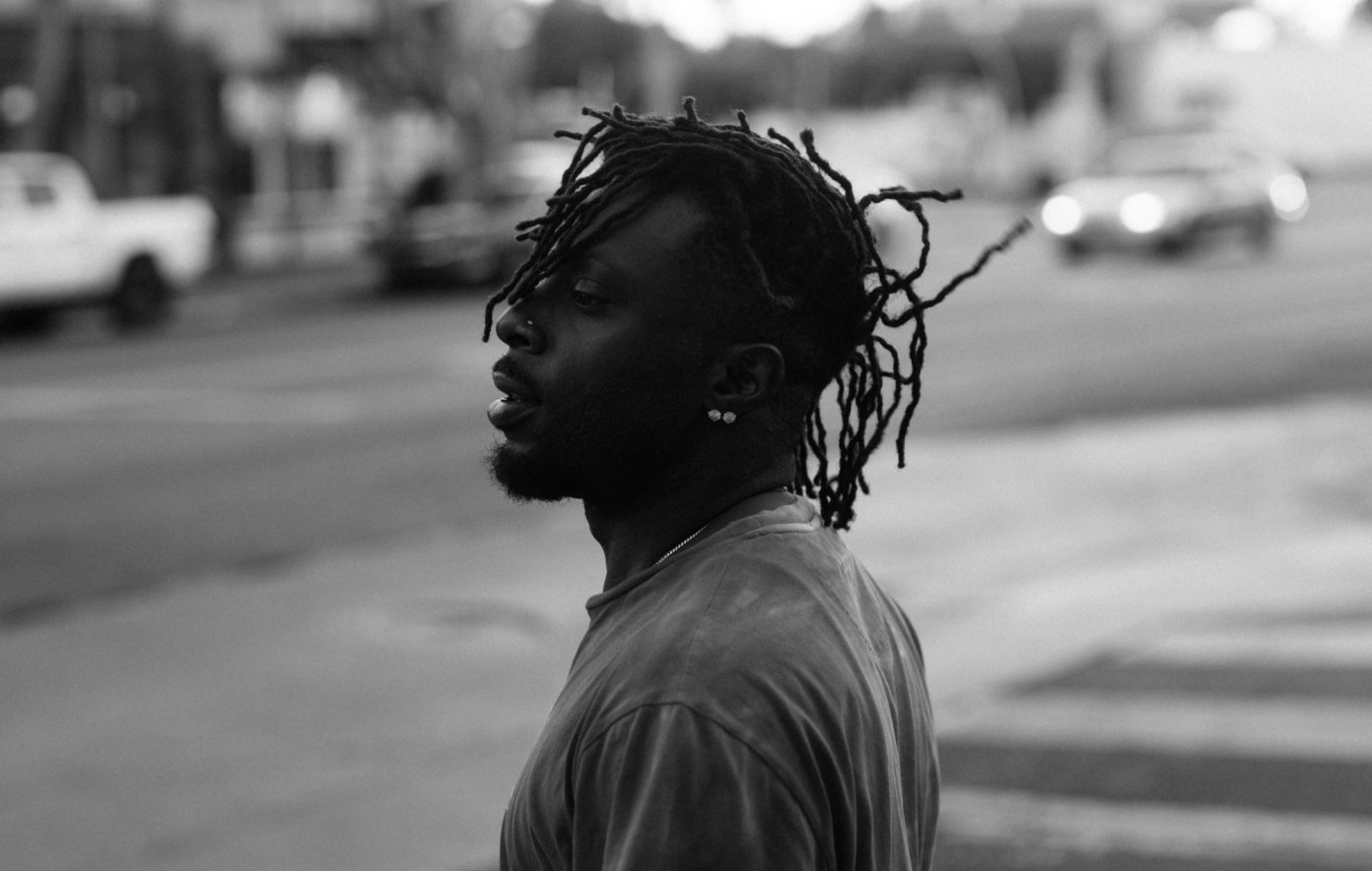
Isaiah Rashad does not hide behind metaphors on his latest album, It’s Been Awful. The title alone tells listeners exactly where his head has been. Honesty has always been central to Rashad’s music, from his breakthrough 2016 project The Sun’s Tirade to 2021’s The House Is Burning. Across his career, the Top Dawg Entertainment artist has carved out his own lane with hazy Southern rap, neo soul textures, and deeply personal songwriting that often goes far deeper emotionally than many of his peers.
Rashad’s previous album arrived after a difficult period involving homelessness and rehab, and this new record comes following another painful chapter in his life. Between relapses, fractured family relationships, and the invasion of privacy that followed the leak of a sex tape in 2022, It’s Been Awful feels like the sound of someone confronting everything at once. He wastes no time addressing it on opening track ‘The New Sublime’, where he raps, “Feel afflicted, falling over / Ask me who I’m fucking, I been fucking up.” The song dives into his fears around sobriety, his sister’s incarceration, and the emotional impact these struggles have on the people closest to him.
Themes of addiction and self destruction continue to run through the album. On ‘Same Sh!t’, a track carrying influences from A$AP Rocky and Skepta, Rashad references substance abuse directly with the line, “The pills, the blow, the ‘yac, the top,” while nodding to classic Lil Jon energy. ‘M.O.M’ captures the cycle of temptation and compromise as he tries to resist one vice only to replace it with another. Elsewhere, he speaks openly about the physical damage these habits have caused, admitting, “The doctor say that shit been fucking with my heart / but I can’t barely sleep / chasing money, love and all of the amphetamines.”
The emotional weight deepens on ‘Act Normal’, where Rashad examines generational trauma and learned behaviors passed through family lines, reflecting on “Acquired secrets / Learned to be the best at it.” Then on ‘Do I Look High?’, he strips away any remaining distance between himself and the listener with one of the album’s most vulnerable admissions: “Last time that I told you that I was clean, I was lying / I’m praying that my sister makes it home by Christmas morning.” The album’s brutally detailed storytelling may feel heavy for some listeners, but that raw specificity is exactly what gives the project its emotional power.
Still, It’s Been Awful is not consumed entirely by darkness. Rashad has spoken about music as something healing and transformative, and throughout the album he refuses to let despair completely swallow him. Inspired by artists like Prince and OutKast, the project carries a warm, sun faded atmosphere that softens the pain without hiding it. ‘Supaficial’ glides forward with bright trumpet accents while Rashad casually delivers lines like, “Where you going? You a junkie, you been way outside.” Meanwhile, ‘Happy Hour’ turns emotional exhaustion into something strangely melodic, pairing confessional lyrics with dreamy piano production. At its best, the album feels like Southern rap drifting through late night R&B haze during a summer drive with the windows down.
On ‘Superpwrs’, Rashad sums up the cycle he seems trapped inside, asking, “How I get sober, fucked up, then clean again, I don’t know,” before acknowledging his own disappearing acts from music with, “How you be rapping circles around n****s, but you don’t drop, I don’t know.” His skill has never been the issue. The real obstacle has always been life itself. But with It’s Been Awful, Isaiah Rashad delivers one of his most honest and affecting projects yet, making it impossible to overlook him any longer.

Share
Advertisement