Hip-Hop Lives Here

Hip-Hop Lives Here

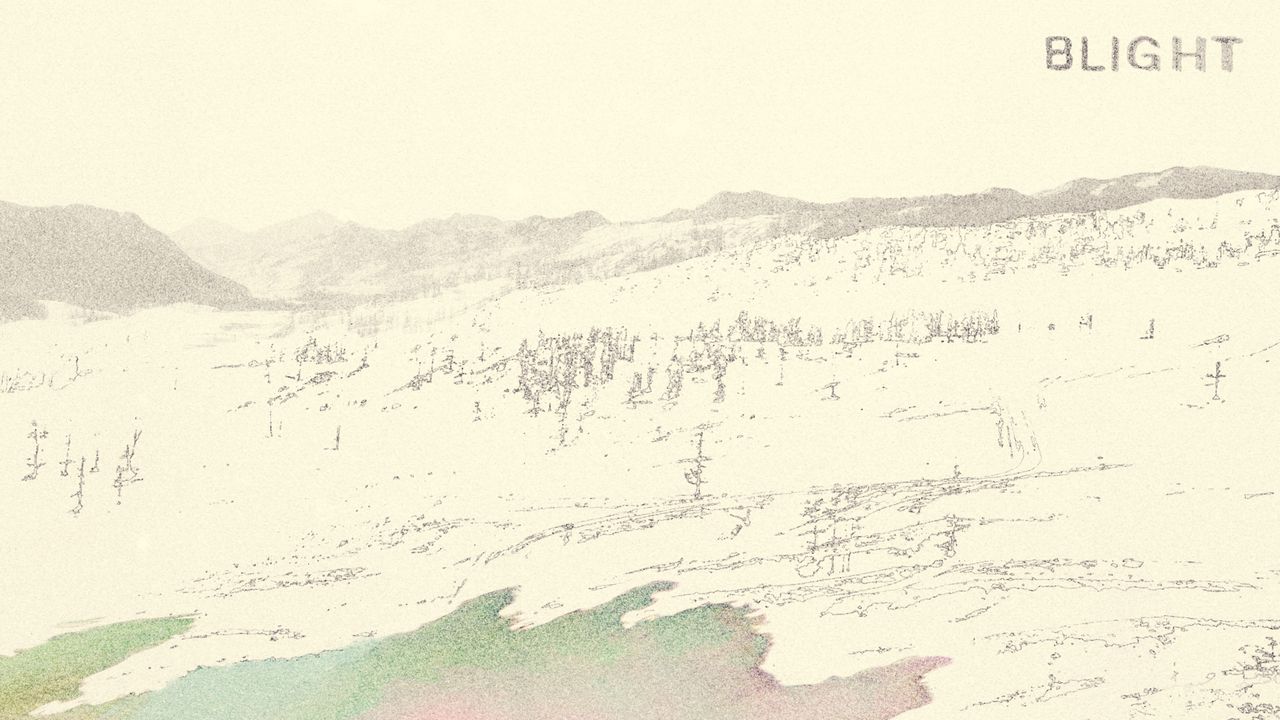
Why review a new Merzbow record in 2025? What can, after all, be said about Masami Akita’s ultra-strident tessellations of sound—where total control masquerades as abject chaos, where extreme volume is a dare to lean in a little closer—that hasn’t already been uttered? Across the last half-century, he has become the metonym of harsh noise while also existing far beyond it, with frequent forays into grindcore bedlam and doom marches, ambient hum and free jazz eruptions. Box sets of 35 and 50 CDs, multiple series of albums that run for years, a collaborative zeal that seems boundless: Merzbow is so prolific that browsing his discography is like autoscrolling an abyss, revealing a catalogue so daunting that many people understandably stand only near its edges. Depending on how you tally them, Merzbow has released almost a dozen titles in the first six months of 2025. What is the point of describing a single drop of water when the bucket is already overflowing?
The simplest answer is maybe half-right: Because he still fucking goes. Merzbow has been charting, destroying, and charting again the outermost edges of sound for nearly five decades; in that time, few others have ever come back with reports so vivid and daunting, so aggressive and nuanced, so exhilarating and enervating. With its laundry-room sense of arrhythmia, blown-out paroxysms of feedback and distortion, and body-quaking drops of bass, the four-track Sedonis serves as a summary of where he has been, a capable introduction that points back to landmarks like Rainbow Electronics, Venereology, and Merzbient. But in its precision and payload, it also exclaims that Merzbow is not yet finished getting to where he is going. This is the work of a craftsperson who has relentlessly honed his skills but who seems as excited by the electricity and possibility of it all as he was in 1997, when he told Perfect Sound Forever “My music is not only my reaction against other music. It’s just my way.”
It is tempting to call Merzbow’s stuff “sculptural,” both as a way to recognize the intentional contour and depth of it all and to dispel the reductive even-I-can-do-that criticisms that have forever dogged him. It is one thing to make noise; it is another altogether to shape it, to mold it. But I have never seen a sculpture move quite like Sedonis, where ceaseless layers alternately summon a hellish symphony, a collapsing dub sound system, and an auto-workers union whose members like to read John Cage essays and watch Einstürzende Neubauten clips in the break room. Anything but static, this is, instead, incredibly athletic music, where moments of power, agility, and grace feel astonishing.
Those instances will vary from listener to listener; Merzbow’s music has always been a series of Rorschach tests, the frames often moving at such high speeds you can barely register them. For me, it’s the spot where, three minutes into “Sedonis B,” he opens up just enough space amid what sounds like the shattering glass of a terrifying car crash to let in a brief fusillade of brutal bass tones; they surprise me each time, like body blows from a prizefighter who was only teasing me by aiming at my face. There’s an infernal buzz that emerges from a whirlpool of oscillators nine minutes into “Sedonis C,” suggesting a swarm of irate mosquitoes, flying into battle. And almost 11 minutes into the half-meditative, half-tormenting finale, “Monolith 4,” there’s a bit that lands like my personal paragon of harsh noise—a curved wall of static suddenly split open by a high tone so pure and piercing it seems too punishing to be intentional. A fluttering little keyboard line in the background rings like a telephone, as if someone were calling to say, “Hey, do you need help in there?”
Speaking of which, the more complicated—and, for me, correct—answer to the question of why we might need more Merzbow in 2025 is that it feels really good to hear this music right now, to be overrun by the force of it all. During the last two decades, gaggles of harsh noise kids, myself included, eased into the more placid realms of drone, ambient, and new age, a reasonable response to both the onset of adulthood and the inevitable anxiety of instant information about everything. Lately, though, I’ve found myself reverting to the old roar, since scoring dread with a nice little hum underlines rather than outstrips the worry. It’s not enough to be distracted.
Sedonis offers the opposite. I’ve found myself playing it loudly in a series of tiny rooms with enormous speakers, especially after long days of bad news, and reveling in the way it allows space for nothing else. It is strangely cleansing to submit to Merzbow in 2025, to let him offer a mind-eraser for these 37 righteous minutes of roiling noise. Yes, that’s probably bad for my burgeoning tinnitus; it appears salubrious, though, for every other inch of my brain.
Merzbow is a punchline, a rhetorical crutch, and surely the only such artist to inspire two podcasts, especially ones that had some interest outside his niche. He is the name you might invoke when you want to make a joke about some grating sound you’ve heard amid city traffic. He plays into the humor, too, with punny album titles and cute album covers where he’s, like, jamming on a laptop underwater with a dolphin. But as he eyes his sixth decade of noise, it is only becoming clear how singular his career has been and still is. He just closed a magnificent nine-album series where beauty and terror were inextricably bound and which ranks as some of the best work of his career. And then there is Sedonis, all tumult and ecstasy, confusion and control—as fucked up as our times, as persistent as the man who made it.
 Share
Share
Advertisement


Isaiah Rashad does not hide behind metaphors on his latest album, It’s Been Awful. The title alone tells listeners exactly where his head has been. Honesty has always been central to Rashad’s music, from his breakthrough 2016 project The Sun’s Tirade to 2021’s The House Is Burning. Across his career, the Top Dawg Entertainment artist has carved out his own lane with hazy Southern rap, neo soul textures, and deeply personal songwriting that often goes far deeper emotionally than many of his peers.
Rashad’s previous album arrived after a difficult period involving homelessness and rehab, and this new record comes following another painful chapter in his life. Between relapses, fractured family relationships, and the invasion of privacy that followed the leak of a sex tape in 2022, It’s Been Awful feels like the sound of someone confronting everything at once. He wastes no time addressing it on opening track ‘The New Sublime’, where he raps, “Feel afflicted, falling over / Ask me who I’m fucking, I been fucking up.” The song dives into his fears around sobriety, his sister’s incarceration, and the emotional impact these struggles have on the people closest to him.
Themes of addiction and self destruction continue to run through the album. On ‘Same Sh!t’, a track carrying influences from A$AP Rocky and Skepta, Rashad references substance abuse directly with the line, “The pills, the blow, the ‘yac, the top,” while nodding to classic Lil Jon energy. ‘M.O.M’ captures the cycle of temptation and compromise as he tries to resist one vice only to replace it with another. Elsewhere, he speaks openly about the physical damage these habits have caused, admitting, “The doctor say that shit been fucking with my heart / but I can’t barely sleep / chasing money, love and all of the amphetamines.”
The emotional weight deepens on ‘Act Normal’, where Rashad examines generational trauma and learned behaviors passed through family lines, reflecting on “Acquired secrets / Learned to be the best at it.” Then on ‘Do I Look High?’, he strips away any remaining distance between himself and the listener with one of the album’s most vulnerable admissions: “Last time that I told you that I was clean, I was lying / I’m praying that my sister makes it home by Christmas morning.” The album’s brutally detailed storytelling may feel heavy for some listeners, but that raw specificity is exactly what gives the project its emotional power.
Still, It’s Been Awful is not consumed entirely by darkness. Rashad has spoken about music as something healing and transformative, and throughout the album he refuses to let despair completely swallow him. Inspired by artists like Prince and OutKast, the project carries a warm, sun faded atmosphere that softens the pain without hiding it. ‘Supaficial’ glides forward with bright trumpet accents while Rashad casually delivers lines like, “Where you going? You a junkie, you been way outside.” Meanwhile, ‘Happy Hour’ turns emotional exhaustion into something strangely melodic, pairing confessional lyrics with dreamy piano production. At its best, the album feels like Southern rap drifting through late night R&B haze during a summer drive with the windows down.
On ‘Superpwrs’, Rashad sums up the cycle he seems trapped inside, asking, “How I get sober, fucked up, then clean again, I don’t know,” before acknowledging his own disappearing acts from music with, “How you be rapping circles around n****s, but you don’t drop, I don’t know.” His skill has never been the issue. The real obstacle has always been life itself. But with It’s Been Awful, Isaiah Rashad delivers one of his most honest and affecting projects yet, making it impossible to overlook him any longer.

Share
Advertisement