Hip-Hop Lives Here

Hip-Hop Lives Here
 Share
Share
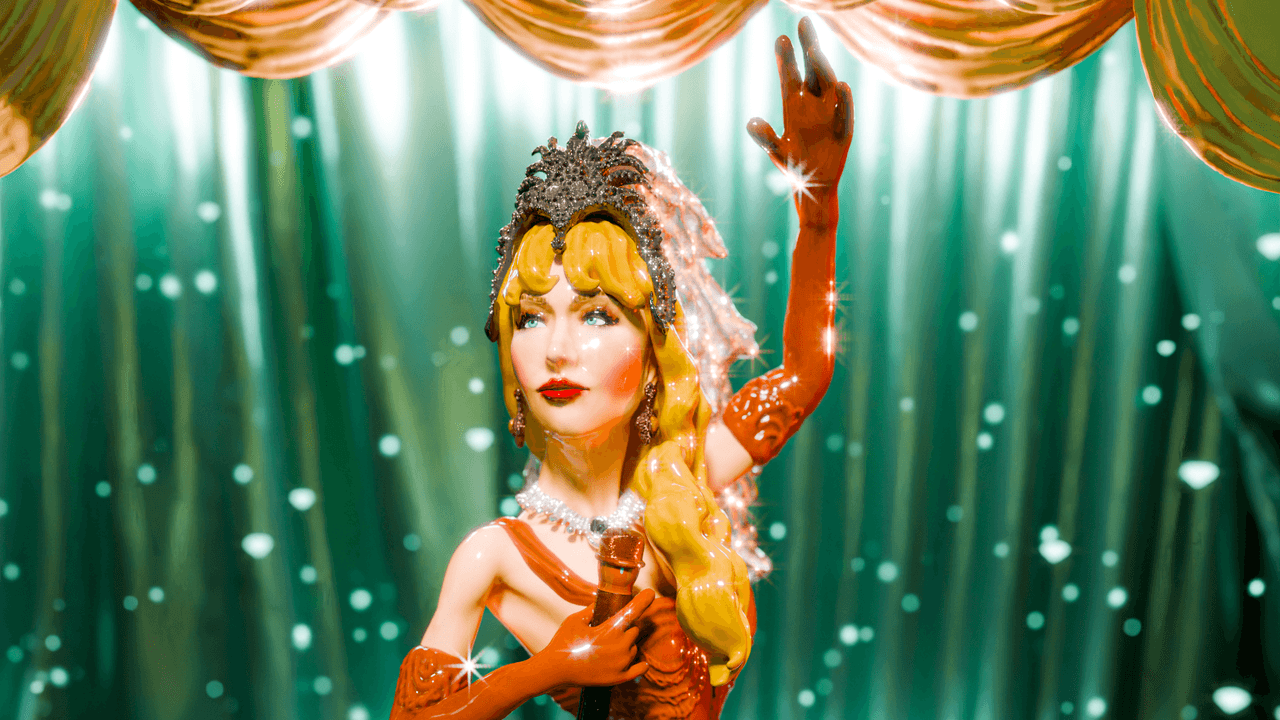
For as long as we’ve known Taylor Swift, she’s played many roles, the songwriter and the storyteller, the narrator and the main character. In the last two years, she’s become both the tortured poet and the billionaire showgirl. Her 2024 album The Tortured Poets Department captured her deepest heartbreak, which unfolded alongside her greatest victories: the record-breaking Eras Tour, her long fight to reclaim her master recordings, and a whirlwind romance with her now-fiancé, Travis Kelce. Never one to take it easy, she began her next project by saying, “I want to be as proud of an album as I am of the Eras Tour, and for the same reasons.”
Swift’s twelfth studio album, The Life of a Showgirl, is anything but reserved. She opens with “The Fate of Ophelia,” a love story that lifts her away from heartbreak, not into a fairytale, but out of tragedy. On The Tortured Poets Department, she spent thirty-one songs writing her way through sorrow. Here, she seems to undo it all in just one.
The melancholy that colored her last four records is mostly gone, yet The Life of a Showgirl still feels surprisingly understated. Swift reunites with pop powerhouses Max Martin and Shellback for the first time in eight years, crafting arrangements built around crisp ’70s soft-rock drums and minimalist hip-hop beats reminiscent of Pure Heroine. The songs focus heavily on her voice and lyrics, but they don’t quite capture the lush emotional nuance she found in her collaborations with Jack Antonoff and Aaron Dessner.
Outside of “Ophelia,” the other clear radio contender is “Opalite,” a breezy pop-rock track that recalls Red-era songs like “Message in a Bottle.” The difference is that 2012 Taylor never would have started a love song with lines as biting as, “I had a bad habit of missing lovers past / My brother used to call it ‘eating out of the trash.’”
For the starry-eyed young Taylor, romance used to be the lens through which she saw everything. Now in her mid-thirties, she still portrays love as pure, but her stories come with more complications. The acoustic ballad “Eldest Daughter” begins with her guarded and detached, then gradually opening up as the song unfolds. The narrative works, but it also shows the album’s smaller emotional scope: she gives the same weight to romantic vulnerability as she does to frustrations about the internet.
That’s about as serious as Showgirl gets, in fact, it might be her funniest record yet, depending on how much you’re laughing with her. On “Father Figure,” she playfully references George Michael while poking fun at her feud with Scott Borchetta and Scooter Braun, singing, “I can make deals with the devil because my dick’s bigger!” Then there’s “Wood,” her first attempt at disco, which channels The Jackson Five’s “I Want You Back” and Diana Ross’ “I’m Coming Out.” It’s a cheeky, joyful track that nods to her fiancé’s prowess both in life and in love. “Wi$h Li$t” is equally over-the-top, think “Royals” rewritten by someone who’s as close to American royalty as you can get, yet its domestic fantasy somehow feels sweet and genuine.
When Swift stops trying to prove anything and simply exists within her music, the magic comes back. “Ruin the Friendship,” like “Betty,” captures the innocence of a teenage crush that lingers into adulthood. “Wilted corsage dangles from my wrist / Over his shoulder I catch a glimpse,” she sings, as memories of missed chances fade into a funeral decades later. Then, in the present, she mourns what could’ve been: “It was not convenient, no / But I whispered at the grave / ‘Should’ve kissed you anyway.’” Swift’s greatest gift, the one at the heart of the Eras Tour, has always been her ability to make a song feel like a lived memory, no matter how many times you hear it.
But by the next track, “Actually Romantic,” she’s back in character, reviving her “Blank Space” persona to seemingly take aim at Charli XCX. Over a grungy Pixies/Weezer-inspired beat, she taunts, “It sounded nasty but it feels like you’re flirting with me / I mind my business, God’s my witness that I don’t provoke it / It’s kind of making me… wet!” The jab feels random, especially given the references to Charli’s “Sympathy Is a Knife,” the “CANCELLED!” lyrics on this album, and their supposed reconciliation on the “Girl, So Confusing” remix. Maybe she wrote it just to amuse herself.
The closing title track nearly ties everything together. Featuring Sabrina Carpenter, Swift tells the story of an aging showgirl named Kitty who warns her about the ruthless world of fame. By the song’s end, Taylor flips the narrative, claiming her own power: “I’m immortal now, baby dolls!” She’s still marked by the battles she’s fought, but she didn’t have to lose herself to win, and she hasn’t shut the door on those who come after her. Like Elizabeth Taylor, the world might gossip about her personal life, but history will remember her career, exactly as she intended.
When Michael Jackson passed away, TIME Magazine wrote, “In the theater of celebrity tragedy, each play has three acts.” Having escaped Ophelia’s fate, Taylor Swift now finds herself in her fifth. She’s still a fascinating main character, though her focus has shifted to life under the microscope of social media. Meanwhile, outside her kingdom, the world continues to face crises, from climate change to political unrest and humanitarian disasters.
There’s nothing wrong with seeking escape, but the best pop music makes personal emotion feel like everything is at stake. Speak Now, Reputation, Folklore, her most powerful albums transformed her pain into something universal. For the first time, The Life of a Showgirl finds Taylor Swift not growing through love, but resting comfortably within it.

Share
Advertisement

Isaiah Rashad does not hide behind metaphors on his latest album, It’s Been Awful. The title alone tells listeners exactly where his head has been. Honesty has always been central to Rashad’s music, from his breakthrough 2016 project The Sun’s Tirade to 2021’s The House Is Burning. Across his career, the Top Dawg Entertainment artist has carved out his own lane with hazy Southern rap, neo soul textures, and deeply personal songwriting that often goes far deeper emotionally than many of his peers.
Rashad’s previous album arrived after a difficult period involving homelessness and rehab, and this new record comes following another painful chapter in his life. Between relapses, fractured family relationships, and the invasion of privacy that followed the leak of a sex tape in 2022, It’s Been Awful feels like the sound of someone confronting everything at once. He wastes no time addressing it on opening track ‘The New Sublime’, where he raps, “Feel afflicted, falling over / Ask me who I’m fucking, I been fucking up.” The song dives into his fears around sobriety, his sister’s incarceration, and the emotional impact these struggles have on the people closest to him.
Themes of addiction and self destruction continue to run through the album. On ‘Same Sh!t’, a track carrying influences from A$AP Rocky and Skepta, Rashad references substance abuse directly with the line, “The pills, the blow, the ‘yac, the top,” while nodding to classic Lil Jon energy. ‘M.O.M’ captures the cycle of temptation and compromise as he tries to resist one vice only to replace it with another. Elsewhere, he speaks openly about the physical damage these habits have caused, admitting, “The doctor say that shit been fucking with my heart / but I can’t barely sleep / chasing money, love and all of the amphetamines.”
The emotional weight deepens on ‘Act Normal’, where Rashad examines generational trauma and learned behaviors passed through family lines, reflecting on “Acquired secrets / Learned to be the best at it.” Then on ‘Do I Look High?’, he strips away any remaining distance between himself and the listener with one of the album’s most vulnerable admissions: “Last time that I told you that I was clean, I was lying / I’m praying that my sister makes it home by Christmas morning.” The album’s brutally detailed storytelling may feel heavy for some listeners, but that raw specificity is exactly what gives the project its emotional power.
Still, It’s Been Awful is not consumed entirely by darkness. Rashad has spoken about music as something healing and transformative, and throughout the album he refuses to let despair completely swallow him. Inspired by artists like Prince and OutKast, the project carries a warm, sun faded atmosphere that softens the pain without hiding it. ‘Supaficial’ glides forward with bright trumpet accents while Rashad casually delivers lines like, “Where you going? You a junkie, you been way outside.” Meanwhile, ‘Happy Hour’ turns emotional exhaustion into something strangely melodic, pairing confessional lyrics with dreamy piano production. At its best, the album feels like Southern rap drifting through late night R&B haze during a summer drive with the windows down.
On ‘Superpwrs’, Rashad sums up the cycle he seems trapped inside, asking, “How I get sober, fucked up, then clean again, I don’t know,” before acknowledging his own disappearing acts from music with, “How you be rapping circles around n****s, but you don’t drop, I don’t know.” His skill has never been the issue. The real obstacle has always been life itself. But with It’s Been Awful, Isaiah Rashad delivers one of his most honest and affecting projects yet, making it impossible to overlook him any longer.

Share
Advertisement