logo

Hip-Hop Lives Here

Grace Ives Talks To Hunter Schafer About The Name Girlfriend

image

In 2022, Grace Ives turned heads with her widely praised second studio album Janky Star. Then, right as listeners were getting pulled into her smoky vocals and synth driven pop sound, she stepped away from the spotlight. After taking a necessary three year break, the 30 year old artist is stepping back into view with renewed self assurance and a fresh project titled Girlfriend. In a conversation with her online friend Hunter Schafer, she explains that she is peeling back the layers of who she is and focusing fully on the music, letting each song speak for itself.

———

GRACE IVES: We’re alone. 

HUNTER SCHAFER: We’re doing it.

IVES: Wait, where are you? 

SCHAFER: I’m in Budapest right now and have been going back and forth between here and Italy for the past month because I’m doing two movies at once right now, which is really crazy.

IVES: Yay!

SCHAFER: Almost to the finish line, which is cool. Where are you?

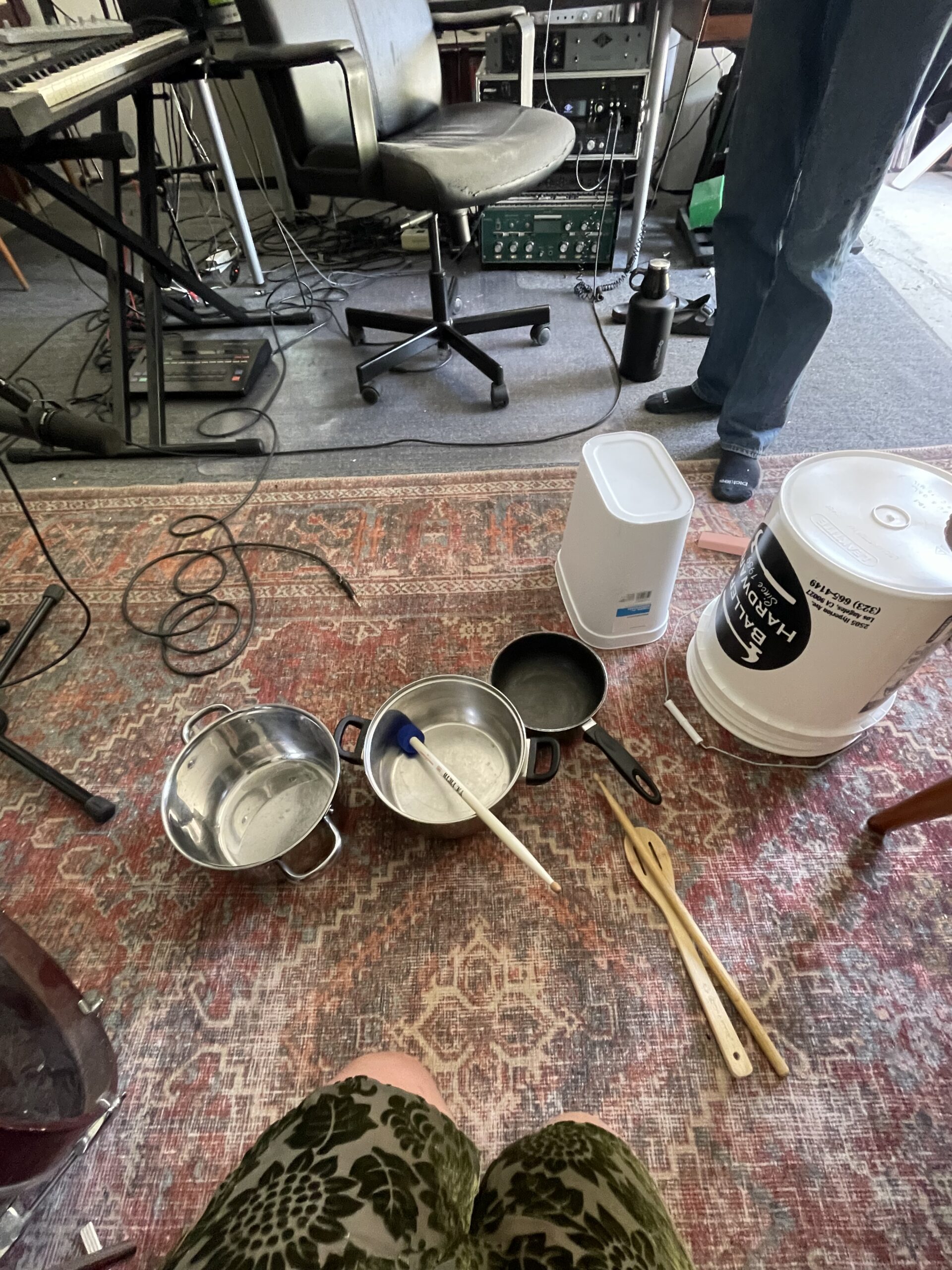
IVES: I’m in L.A. doing rehearsals for a release show for the album on Saturday.
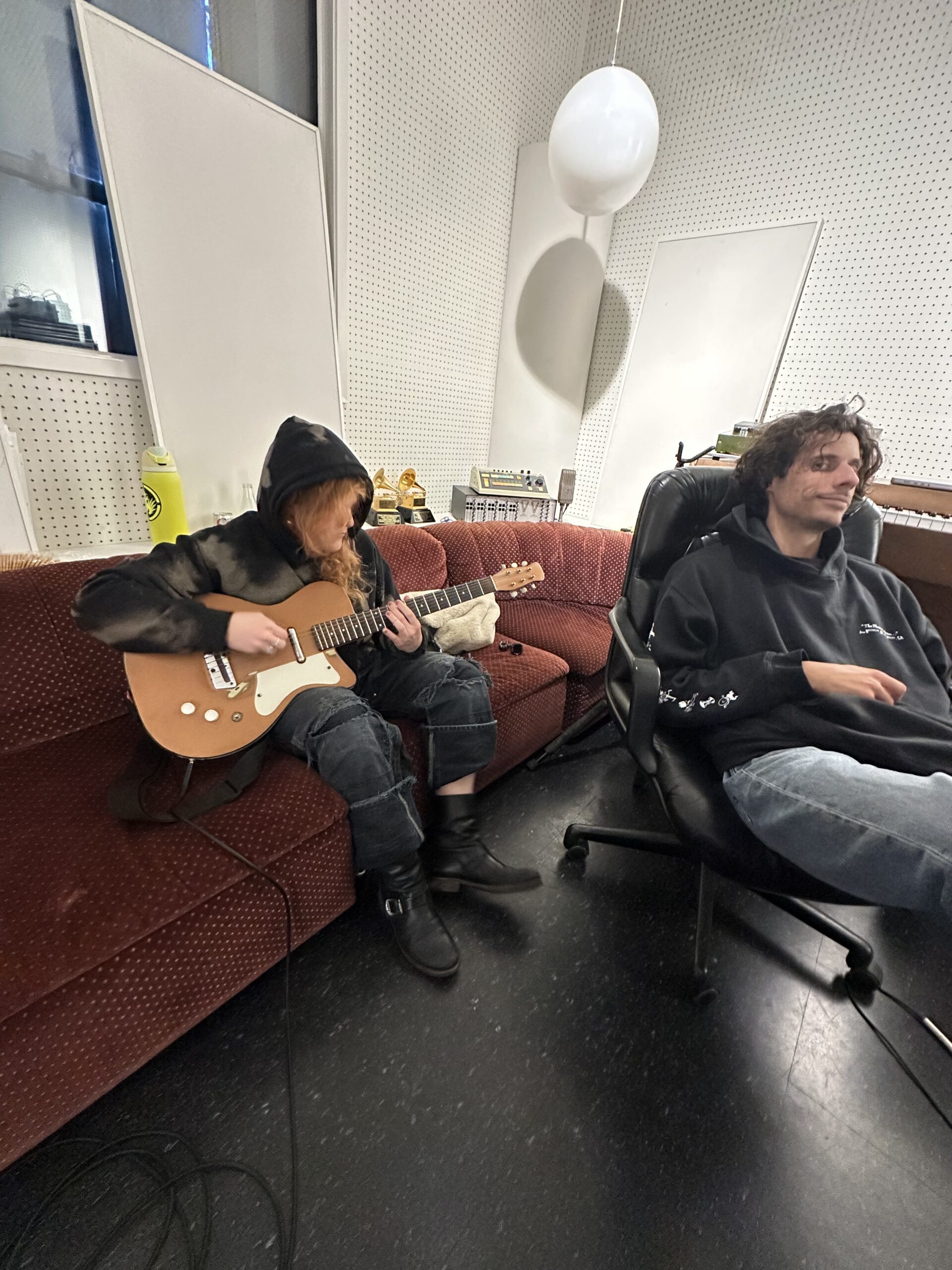
Grace Ives

SCHAFER: Oh my god. Are you excited?

IVES: I’m excited. Yesterday, Ariel [Rechtshaid] sent a text that was like, “Reached out to Charli and she wants to come.” And I’m like, “Oh!”

SCHAFER: Wait, Charli XCX?

IVES: Yeah.

SCHAFER: That makes a lot of sense though. The sonic relationship is there.

IVES: We’re both just people. 

SCHAFER: Wait, do you live in L.A.?

IVES: No, I live in New York. Where are you from? 

SCHAFER: I grew up in a few different places, but I just say North Carolina because that’s where I spent the longest time in my childhood. You grew up in New York, right?
IVES: Yeah. In Lower Manhattan, like 12th between 6th and 7th for a while. And then Brooklyn. Are you in L.A. mostly?

SCHAFER: I technically live there, but I’m never there. It’s just because of this little lifestyle I’ve got going on. I’m living out of suitcases right now. Maybe that’ll change someday. 

IVES: I can relate. The suitcase life is so fucking hard. 

SCHAFER: Are there any parts of it that you like?

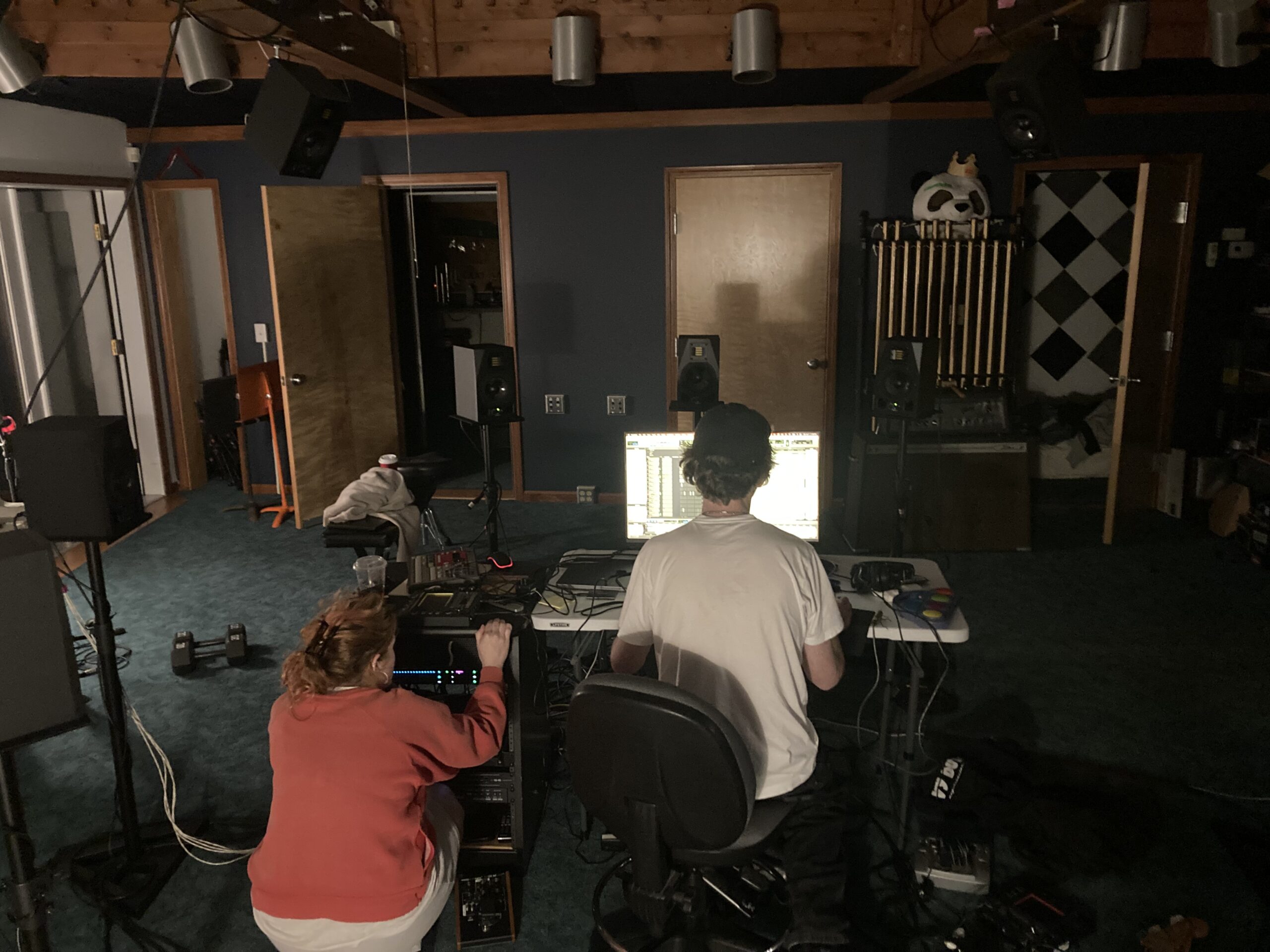
IVES: Yeah. I realized recently, “Oh, this is the fun part of this, a fucking tour.” It’s physically crazy and emotional. But then I’m like, wait, It’s so special.
Grace Ives

SCHAFER: So you took a three-year hiatus?

IVES: Yes. I went on tour and then came back to Brooklyn and then started just collecting songs. But my last tour was like, “I don’t remember that.” 

SCHAFER: Does this one feel different?

IVES: I think so. Before, I was like, “I’m disconnected from the people who interact with it.” It’s weird to have fans, especially when for so long been like, “I don’t know if anybody likes me.” This time around, I’m like, “We need to come together.”

SCHAFER: And you feel ready to face that.

IVES: Exactly, and just be excited to get to show the music to people. Because it’s not just for me, it’s for people to hopefully be moved by.

SCHAFER: Yeah.

IVES: I mean, it’s weird. I’m sure you have a relationship with fans, but they’re seeing you and identifying with your ability to become someone and use parts of yourself to do that. And then people are like, “I love that. I love you.” I wonder what that is.

SCHAFER: It’s similar in a lot of ways, but where I imagine it’s different is with fans or people who watch the work, they end up having a relationship with the characters that I do. And then I’ve also had to create a character of myself, because I feel like it’s much nicer for my brain to separate it. Do you feel like there’s a little gap?
IVES: There probably should be, but I’m not there yet. I’m just being myself. If I looked at my Instagram, I would be like, “I don’t really know who this person is.”

SCHAFER: Yeah.

IVES: There might be a gap because some people are like, “Oh my god, this song changed my life.” And I’m like, “I hate that song of mine. That’s my worst one.” With musicians also, I love when I see people’s personality. That’s what has helped me make better music also, just literally being myself.

SCHAFER: Was that your approach with making this new album? Did you have one more holistic idea of what it would be, or was it more about just getting in the studio and you being you and letting that be it?

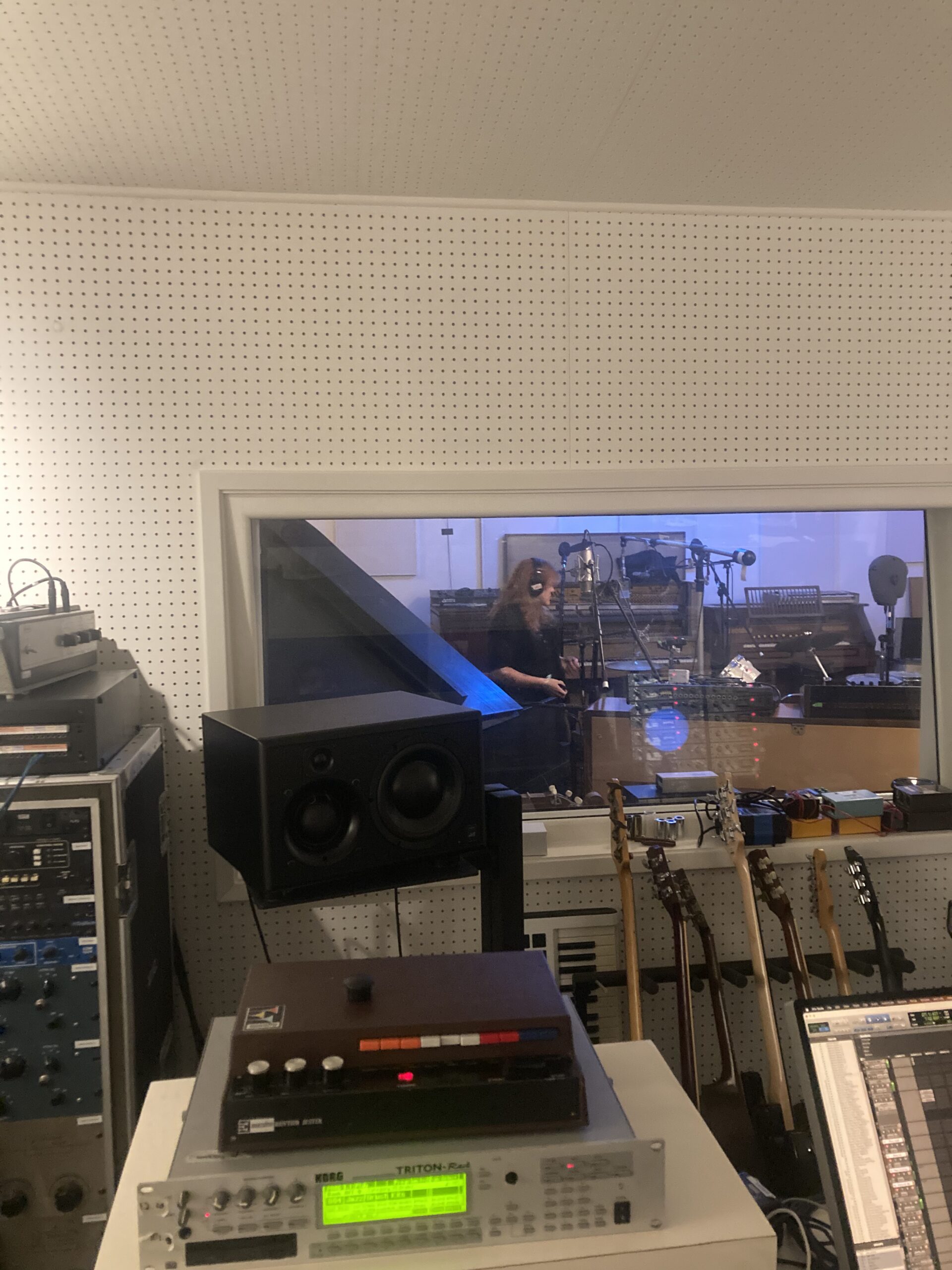
IVES: It’s the latter where it’s like I have all these songs, and then in order to make them with another person, I can’t hide at all. You can’t be shy about it or else you’re not going to get what you want.

SCHAFER: Yeah. 

IVES: In the past I’ve been afraid of speaking up because I don’t want anybody to be mad at me.

SCHAFER: I feel that so much with acting, too. I have to remind myself that I’m going into work to play this other person, but when it comes down to it, what really makes something sing are the moments of looseness and freeness when you might’ve gone too far.

IVES: Where you just let yourself react to the other person?

SCHAFER: Yeah, you get a little lost in it, a little lost in the songs.

IVES: Yes. When you’re crying, I assume that you’re tapping into a true part of yourself that would be sad about something.

SCHAFER: It depends. Crying is always particular and funny because it’s always like all I have to think about is what’s actually happening in the scene or whatever. And then other times it’s like, “No, I think I need to go visit somewhere that’s hiding in my head and sit down there for a second and get cozy in the grossness or whatever it is.”

IVES: Totally. I’m fed so many acting class videos on TikTok or Instagram and I relate to it. 

SCHAFER: Wait, okay. I want to ask you specific album questions.
IVES: Okay.

SCHAFER: So it’s your first album after a three-year hiatus. Do you feel like you have grown or changed as an artist? When did you know that you were ready to start making a new project again?

IVES: I was living this life as somebody who makes music in the way that a college kid would, where it’s pretty unserious and a little bit self-involved. I’ve moved away from being so scared of judgment or any kind of reaction that would make me feel bad about myself. I got there in the process of making this current album by actually physically working with someone else. I’ve definitely changed. I mean, three years is crazy.

SCHAFER: It sounds like making music was more kind of a by yourself activity, right?

IVES: Yeah.

SCHAFER: Was there a process of figuring out who you want to let in and of breaking the walls down?

IVES: Totally. At first, I was very like, “I’m going to do it all myself because if I work with another person, everyone’s going to think that they did it and not me.” There’s this fear of just not being a guy in the room, fear of people taking credit, of being overlooked.

SCHAFER: Yeah, totally. 

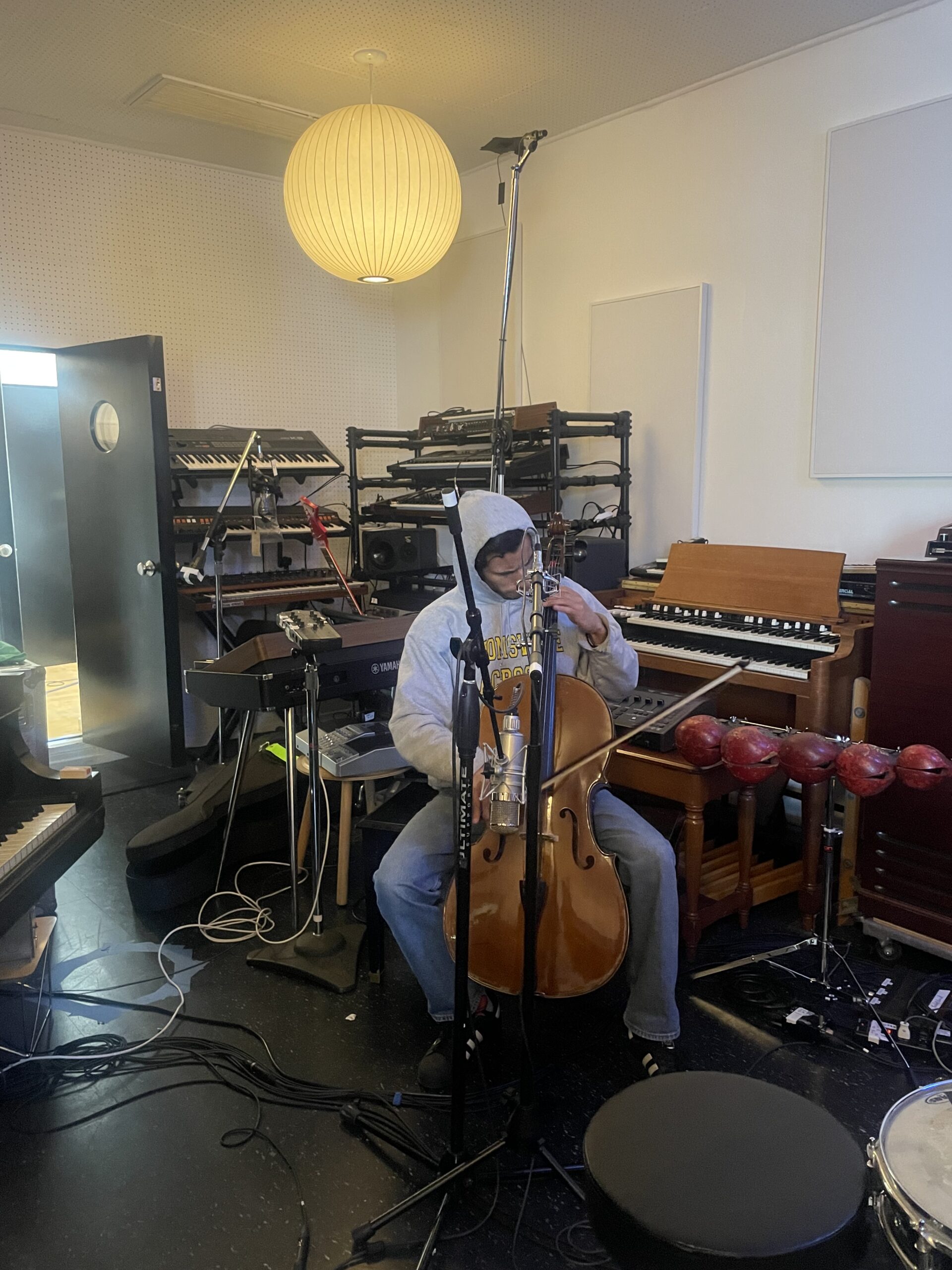
IVES: And then I got lucky in the people that I worked with like  John DeBold and Ariel. I trust them. I’m not “other” from them. I struggle with feeling like I don’t belong, or like there’s something wrong with me. But trusting these two people, John and Ariel, is like, “Oh yeah, we’re all the same. At least in this room.”

SCHAFER: Did your relationships change with them over the time you made it?

IVES: Definitely. When I started, it was just John and I, and I was kind of still in party mode, just being not nice to myself and everybody. So I was not really forming a real connection with him because I was just thinking about myself and what I did last night. John is close in age to me and he works out of his back garage and he’s young in his career and I feel similar. So I kind of just felt like working with like we’re kids.

SCHAFER: Yeah, or your neighbor or something.

IVES: And then Ariel is like my favorite.

SCHAFER: Aww. Wait, one thing I’m always curious about is how you choose the order of songs, especially if you’ve made them not with a particular sequence in mind. How do you figure out what the story and the evolution is?
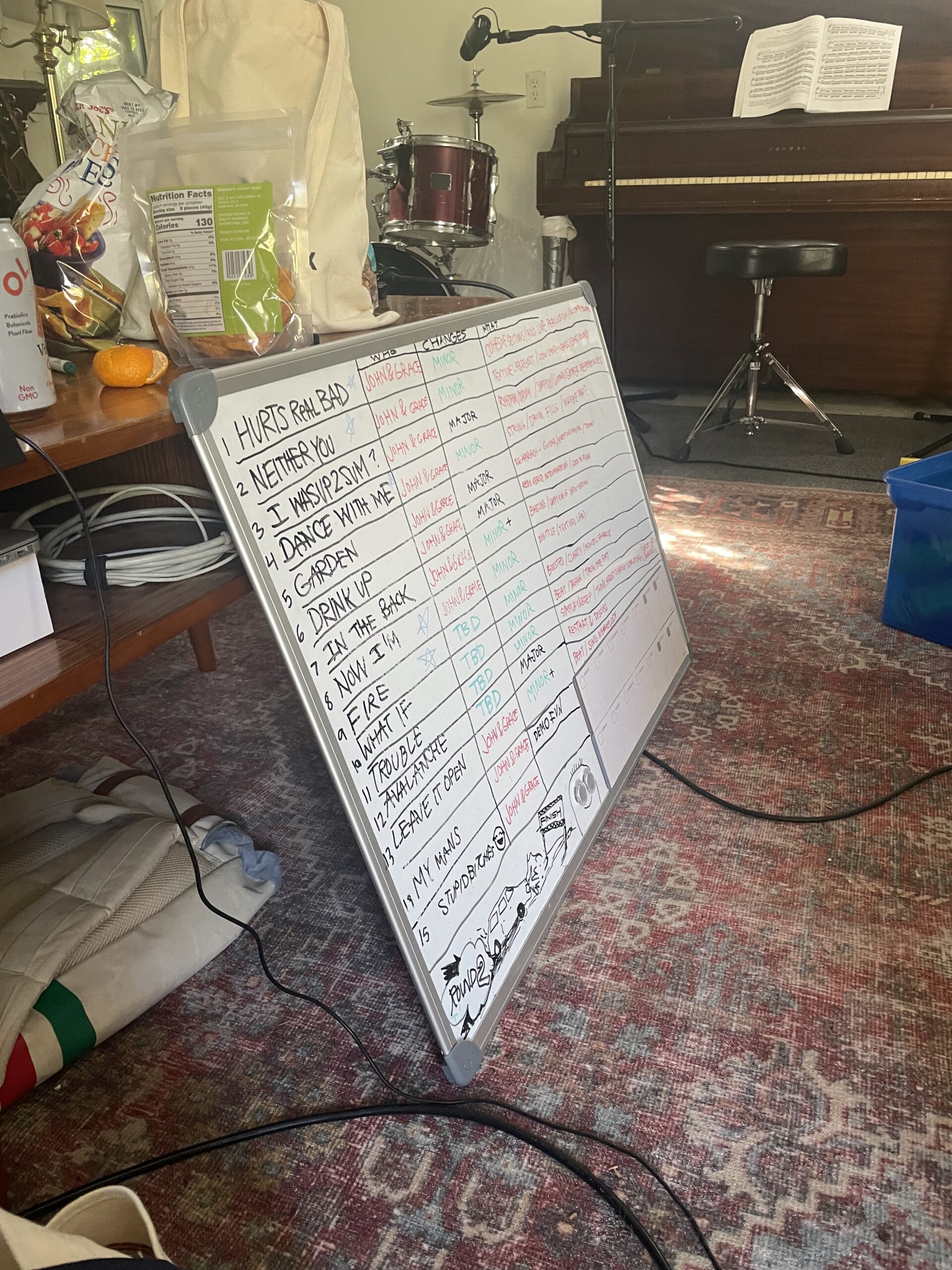
IVES: I grew up being very playlist-minded, so when I’m putting stuff together it’s very like, “How does it feel to listen to this all the way?” This time it’s like, “What feels good? If you were just sitting and closing your eyes and listening to this, would you want to fidget? Does it feel okay?”

SCHAFER: My stylist, who works for Interview actually, is always talking about letting the eyes rest at something. Because we always go through this process of adding a bunch of stuff to an outfit and then realizing, “Oh, wait. We need to respect what’s asking to be looked at, and then take away elements.” 

IVES: I have goosebumps for no reason, but that was amazing.

SCHAFER: The words of Dara.

IVES: I love it. I’ve done that where I’ve had a really amazing song and then I’ve just kind of destroyed it by adding and adding and trying to make it beautiful when it already was.

SCHAFER: What made you land on the name for this album?

IVES: I was thinking way too hard about it for so long.
Grace Ives

SCHAFER: That just made me think of how daunting thinking of an album name would be.

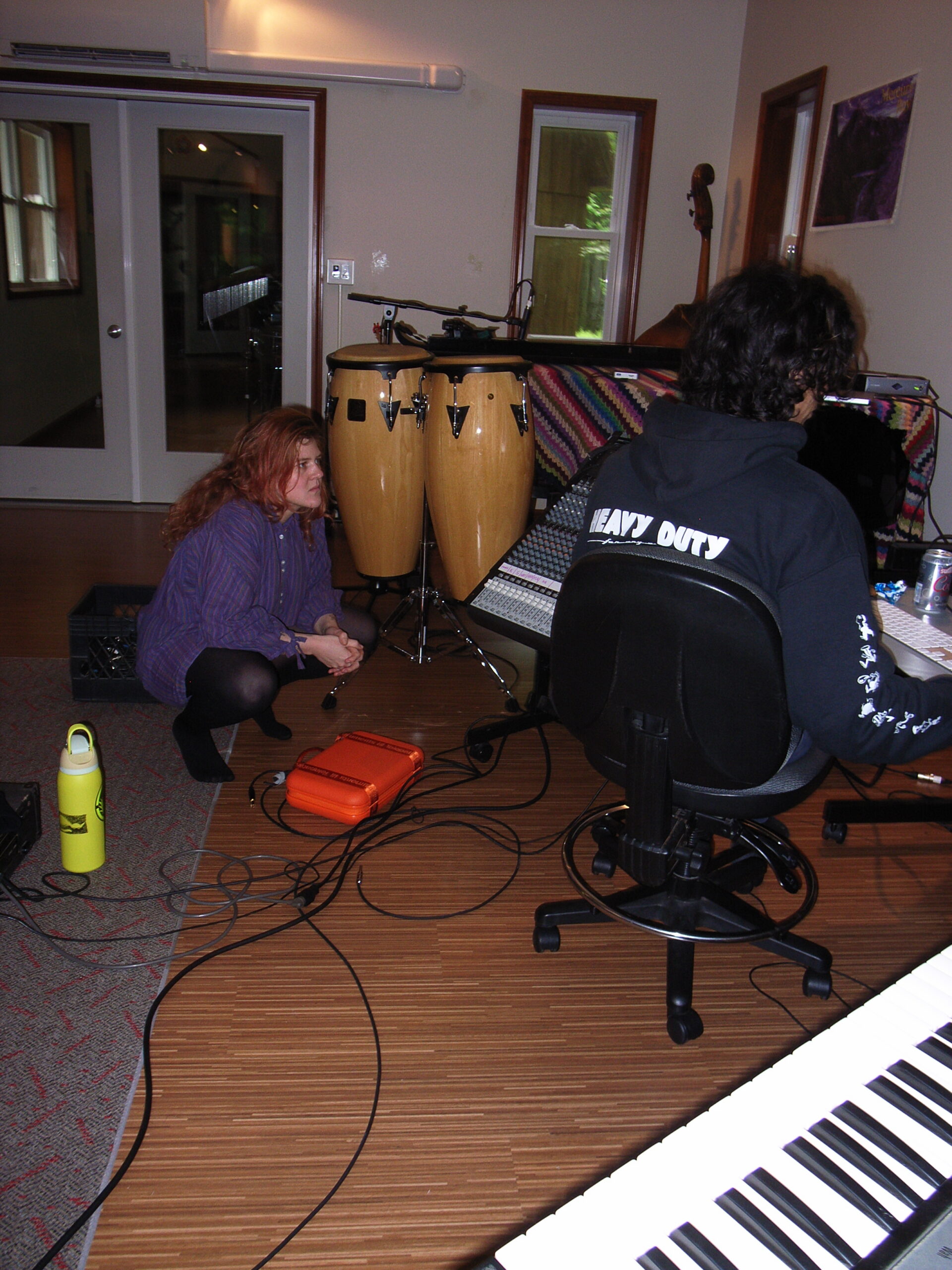
IVES: I literally made a word cloud of all the lyrics and was like, “Okay, most used word. What’s the through line?”It’s like me kind of stripping myself down to one identity. I’m somebody’s girlfriend and I have a responsibility to them and I belong to them happily. Each song is from the perspective of me in somebody’s life.

SCHAFER: As their girlfriend.

IVES: Yeah, it’s just also so cute as a word. [Laughs]

SCHAFER: It’s really cute. I agree. 

IVES: It’s a cool word also because it’s kind of temporary, which is just interesting, especially as a name given to something because it will be over, and this album represents who I am right now. There’s something kind of sweet about the label of girlfriend, new and young.

SCHAFER: You allegedly worked some odd jobs before making it to musician. Did you learn anything that helped you on the other side as a musician diva?

IVES: Oh my god, I worked as a coat check at a venue, which was so hard for me. 

SCHAFER: It’s so hard.

IVES: I was a dog walker.

SCHAFER: Whoa.
IVES: And I said that I had a bike, but I didn’t. So I did it by scooter.

SCHAFER: You walked dogs while moving on a vehicle?

IVES: No, like to get from place to place. It was like East Williamsburg and then true Bushwick, and then it was straight out. The woman who was facilitating it, hired just by phone. I never met her, and she was like, “Why is it taking you so long?” I’m like, “Traffic. And it’s raining.” 

SCHAFER: Wait, Razor scooter or Bird scooter?

IVES: Razor scooter.

SCHAFER: Razor scooter, let’s go!

IVES: I worked in a restaurant for a while. By the end, I didn’t need a notepad or anything like that. And I think then I got frustrated with people because I wanted them to be uncomplicated, but then you realize that people are complicated.

SCHAFER: But that’s such a mature take for a service worker.

IVES: Well, I was exhausted and pissed. But it’s good to do good hard work. Sitting at home and making music is pretty romantic and makes it a little bit sweeter.
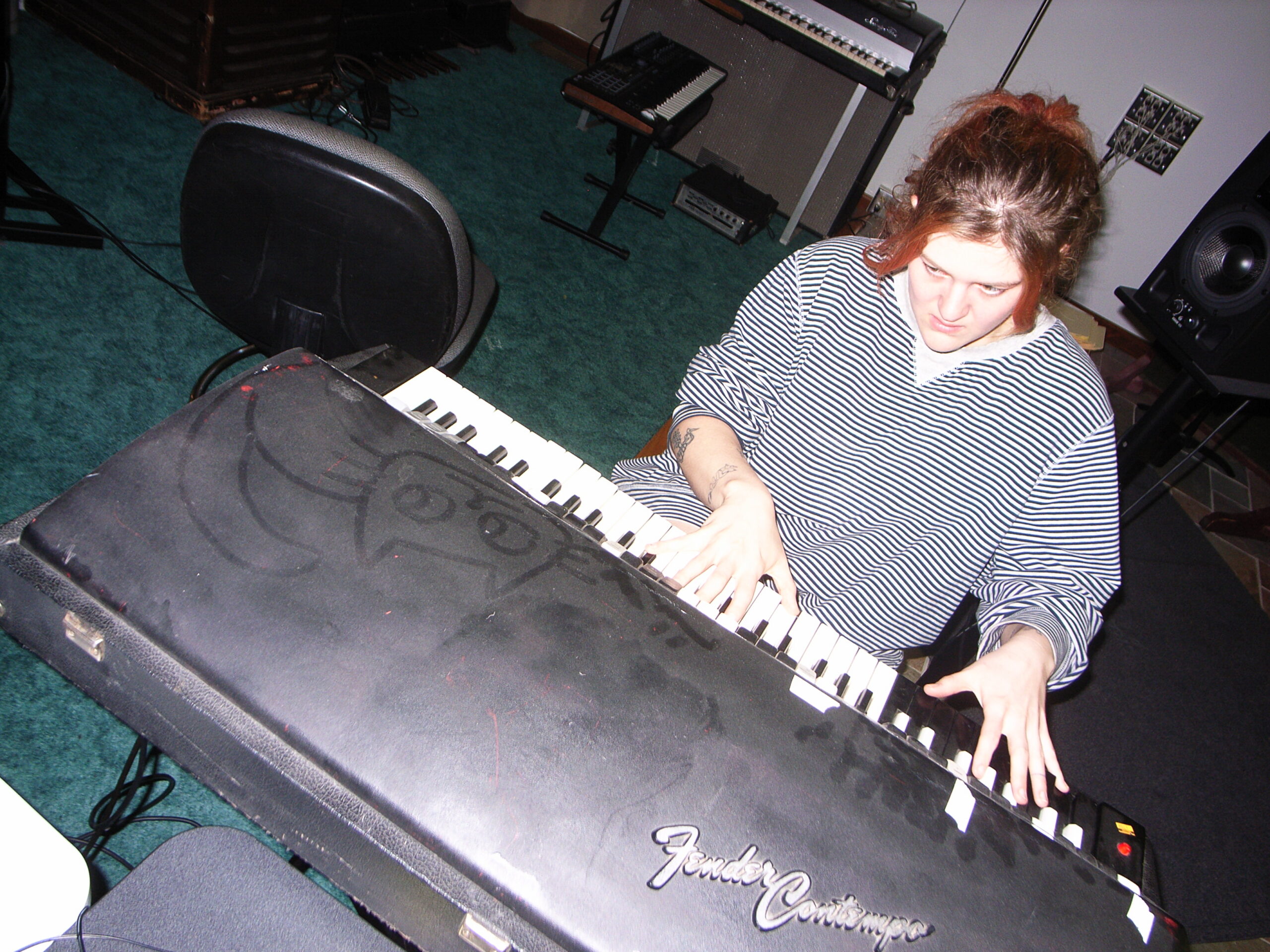
SCHAFER: Did you know early on that “Dance with Me” was going to be a centerpiece in the album? 

IVES: No. That’s one I was sitting on for a while, just had the guitar version of it. The chorus in my mumbling used to be like, “Why don’t you come home and finger me?” Which is, “Delete!”

SCHAFER: Kind of amazing. [Laughs]

IVES: I wasn’t ready. Now I’m like, “Okay, I could go there next time.” I didn’t really know what it would be while I was making it, and then it just turned into something electric and fun. I mean, it’s a song that says “dance” in it, so you want to do something in that world that–

SCHAFER: Feels alive.

IVES: Yeah, I’m happy where it ended up. It’s nice to talk to someone about sharing art and to think about the similarities is really exciting. I liked these past 30 minutes.

SCHAFER: Me too. I find the musician archetype really yummy.

IVES: I just want to hang out and talk to you, but I think we did it.
 
Leave a Reply

Advertisement

image
MOST POPULAR
  • Home
  • Unsigned Heat
  • Peter Mergener Explores “Chip Mediations For The New Millennium” And Software History

Peter Mergener Explores “Chip Mediations For The New Millennium” And Software History

image

Is there a concept behind Chip Meditation 2025? Is it a comment on AI in some form?

A few of the titles are terms from chaos theory, just as on Chip Meditation Part I. For me it was obvious to also name the tracks on Chip Meditation 2025 using concepts from that field.

When it comes to AI, it’s astonishing to me to see what human beings will invent and develop, only to eventually make themselves redundant. For me, music is a purely human affair. Human beings should make music for other human beings. The fact that artificial intelligence can do this as well is interesting, and it will certainly continue to grow in importance in the future. Things always continue moving forward.

But whether everything new is automatically a good thing remains to be seen. It will definitely change the world of music.

How would you describe the points of departure and processes for Chip Meditation 2025?

With Chip Meditation 2025, I basically just wanted to commemorate the 40th anniversary, and I tried to put myself back into that period of time. Of course I also wanted to use similar sounds and sequences that would remind listeners of those first productions. Back then, it was the beginning of a long musical journey.

None of the new tracks were re-recordings of older material. They are all completely new compositions and productions that I created in 2025 in honour of the 40th anniversary. Considering that some of the older tracks were still recorded partly with cassette recorders, they still sound very good today. Of course the 2025 music sounds more refined and fuller because of the newer equipment.

I approached the production process in the same way I usually do: starting with a four-bar sequence. Then the rest of the piece develops quite naturally through experimentation, transposition, and so on. Often it almost feels as if things are happening on their own accord.

I think Chip Meditation 2025 is very sequence-focused. I don’t plan things too rigidly beforehand, however. I just let it flow and am often surprised by what emerges.

Your new album is already the third entry in the Chip Meditation series. Tell me a bit about this sound world that currently inspires you so much and the history of Parts I and II.

After the first part, things kept evolving continuously. We gradually bought more and more new equipment. For example, Michael Weisser, my former partner in Software, ordered the then extremely expensive Emulator II+, which allowed us to take another step forward sonically with a huge range of drum and percussion sounds, choirs, and strings — a massive palette of professional sounds.

Michael handled the organization and selection. I left it up to him when, how, and where things would be used. He did an excellent job, and when a new LP was finished, it was often a premiere for me as well — I was hearing it for the first time, at least with the early albums.

Chip Meditation Part II simply ended up getting released in 1989 for no other reason that the process was finished at that point.

With Electronic Universe II, you can clearly hear the sonic difference compared to the first album.

Yes, but Part II wasn’t really intended as a sequel.


Michael acquired original NASA voices and radio signals, which were incorporated into the music. It’s a pity that he wasn’t a musician and didn’t really compose, but he still had very good ideas. His cover designs and so-called “hi-tech lyrics” were something new and gave our productions a distinctive identity.

People often asked how we managed to work together when one person lived in Bremen and the other 500 kilometers away in the Southern Eifel. We communicated only by telephone, fax, and music cassettes that Michael commented on.

I’d like to briefly go back to the time before the first Chip Meditation, when you started working on the demos that later became the first album. What exactly fascinated you about the music of Klaus Schulze and Tangerine Dream at the time? 

It was this sense of something completely new — these electronic sounds, and of course this music that invited you to dream. At that time, there was nothing like it. It was often referred to as “cosmic music,” and the musicians  as “cosmic couriers.”

And then there were the live concerts, young Klaus Schulze, dressed in white, sitting on a flokati rug in front of a huge synthesizer setup, conjuring these crazy sounds and sequences from it. Tangerine Dream had a similar effect.

It really grabbed you, and naturally I wanted to do something like that too.

1984–1986 were incredibly productive years: two Software albums and three Mergener/Weisser albums. How did you experience that period, and how did you divide the material between the two projects?

Beam Scape was the first Mergener/Weisser album, although the music itself had already been produced earlier. It was only released after Mark Sakautzky took over Klaus Schulze’s label. It then became the first official release on the IC label under the new management.


I actually travelled to Braunschweig to rent a Tascam 8-track tape machine from the studio “Die Werkstatt,” run by Lutz Meyer, where I recorded the music. A week later I mixed it down there on a Tascam 32. At the time I wasn’t nearly as well equipped as I am today — all of this was before 1984.

The very first production was called DEA ALBA, a cassette book with a science-fiction story by H.W. Franke and Michael Weisser, though it wasn’t released until years later.

What were those first sessions like?

The first working session in my studio in the Southern Eifel consisted of Weisser visiting me and recording a few spoken lines over music I had produced. Everything else developed later.

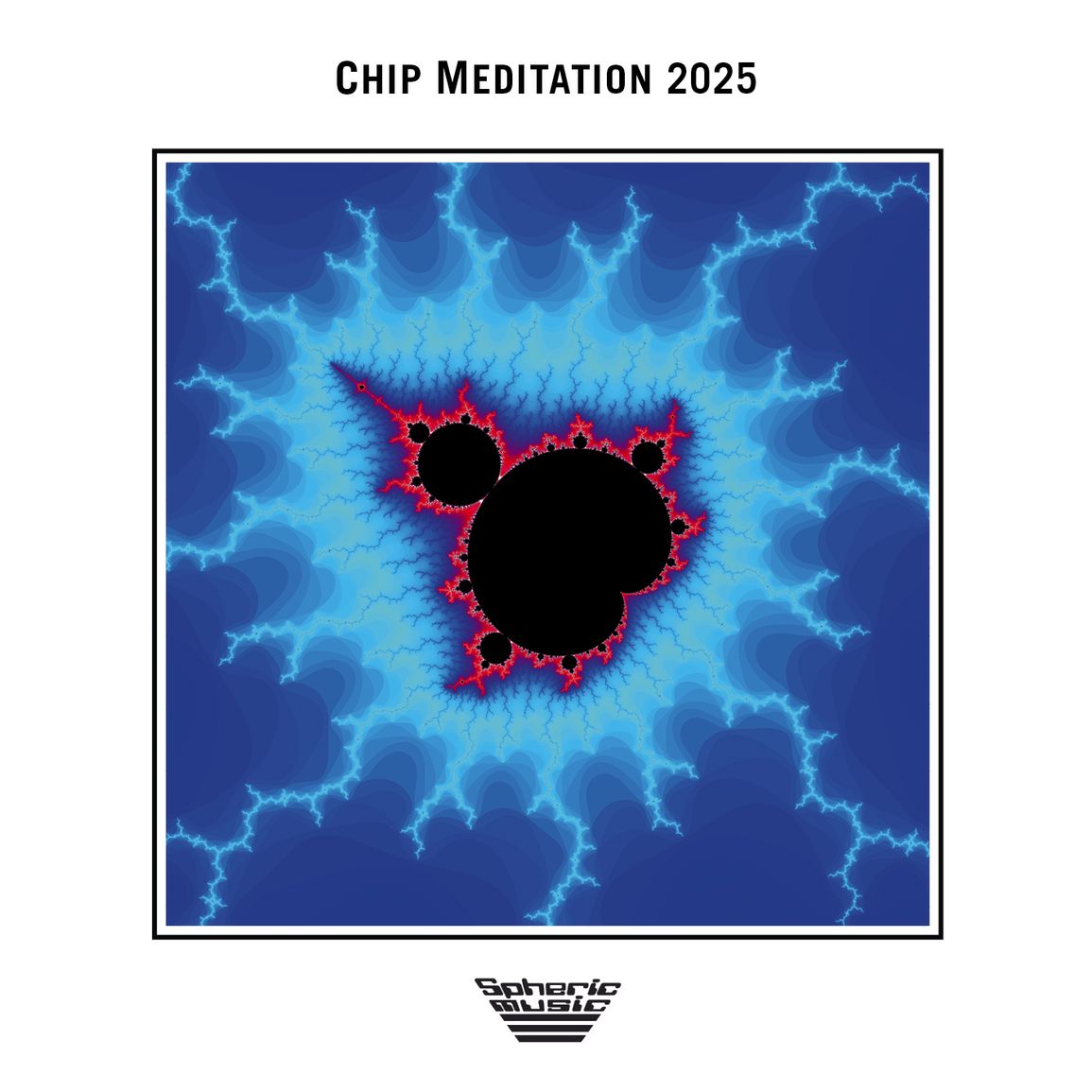
Michael and I agreed that we didn’t want to split hairs over who had done what, exactly. It was meant to be our shared product. He handled the artwork, cover design, and everything else, such as obtaining the fractals. I was responsible for developing the music, and this is where my demo cassettes came into play — Michael found them extraordinary and wonderful.

I constantly created new sounds and sequences, sent them to Michael, and he commented on them via cassette tape. In that sense he did have an influence on the tracks, but he never really composed or played music in the compositional sense — that was my role. Nevertheless, we registered all tracks with GEMA under both our names as authors.

Michael used these many tracks according to his own taste and gave them their titles. Ultimately, for us, the important thing was the final product: the LP or CD.

You also mentioned an IC meeting with many artists from the label. Can you tell me a bit more about that?

The IC label became successful very quickly and, together with distributor DA-Music, wanted to thank its artists. So they invited everyone to Worpswede, an artists’ village, to spend a nice day together at the “creative house,” with food, a program, walks through the moor, and so on.

Among those present were Mind Over Matter (Klaus Hoffmann-Hook), Peter Seiler, Stephan Töteberg (Quiet Force), Burkhard Schmiedel, and others. It was a wonderful day with many good conversations and a chance to get to know fellow musicians and the people from the distribution company.

After checking and listening through the CDs, the following tracks turned out to be those demo tracks of mine from the early 1980s: on Chip Meditation Part I and II (CD), all except the track “Voice Bit,” which consists only of spoken text that Michael had Horst Breiter record in Bremen.


Also from Phancyful Fire: the tracks “Phancyful Fire” and “Sunny Rom Rise,” and from Beam Scape (LP): “Rainbow,” “Sunbeam,” “Shooting Star,” and “Small Spark.”

In our last interview you mentioned that a vocoder was also part of the studio, though I’m not exactly sure when it was added. How and in which productions did you use it with Software?

I bought the Korg Vocoder as early as 1979. I used it to create those alien voices on DEA ALBA by feeding a sample-and-hold sound from the Moog into the vocoder.

The whispering at the beginning of “Flowers of Boundary” was done that way too.


You also worked a lot with the Korg MS-20. Interestingly, even back then it was no longer brand-new. What does this synth still mean to you today?


I still think it’s wonderful. It decorates my studio and is practically my original source.

It was my very first instrument, so it’s sacred to me — although at the beginning it also cost me many hours of experimentation and learning.

How would you reflect on the development of your studio and the way it fed back into your music?

At the beginning of our collaboration, the studio consisted entirely of my own equipment. Once the first productions started bringing in money, Michael contributed a Tascam 34, a Craaft mixing console, and a Roland SRV-2000 reverb unit. Later he added a Tascam 8-track machine and an Allen & Heath console.

Michael made this equipment available to me, although it remained his property, and after our separation he took it back and lent it to Stephan Töteberg, who then took over my role.

Over the course of our collaboration, a large amount of music was created in advance — pieces I composed simply out of enthusiasm and which only later found use. Michael always told me never to delete or throw anything away, but to let him hear it first. That’s how tracks like “Present Voice” ended up being used — he thought it was fantastic and placed it on a sampler.


I had actually improvised that track one afternoon with Wolly Snyder, just on a whim. It’s basically live, still controlled by the Commodore C-64 — this was right at the beginning of MIDI. The Synthesizerstudio Bonn built me an interface for the C-64 with a sequencer program. Many tracks were controlled with it, and all the sequencers ran in sync with it, including my TR-808.

Later Michael ordered a sequencer program for the C-64 from Jellinghaus in Dortmund, and after that Atari gave us a computer with the C-Lab Notator software. Things just kept progressing from there. The highlight was the Notator, which I still enjoy using today.

Can you imagine returning once again to the world of Chip Meditation?

Yes, absolutely. I’ve already thought about creating more music in this style, and I already have plenty of graphics prepared for new covers. We’ll see.

image of  

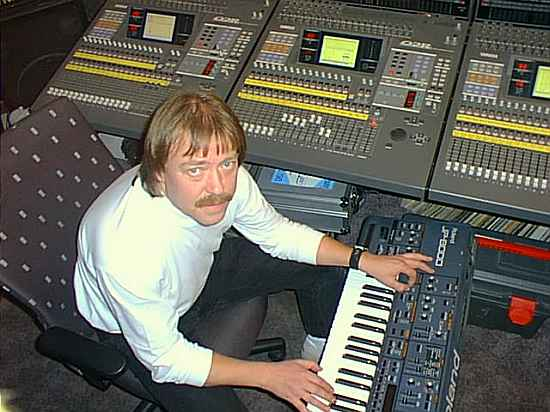
Peter Mergener Chip Meditation 2025 (c) the artist
 

"I don’t plan things too rigidly. I just let it flow and am often surprised by what emerges.”
Video
   
Leave a Reply

Advertisement

image
MOST POPULAR