logo

Hip-Hop Lives Here

The Paper Kites Interview

image

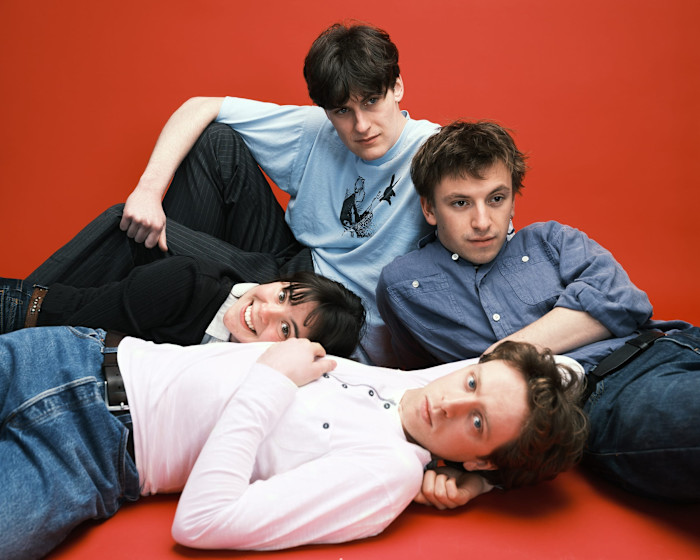
Melbourne Indie Folk band, The Paper Kites have released their latest single St. Clarity and will be following it up with a national headline tour. Shortly after, The Paper Kites will be heading over to the US, which will be their first time performing on US soil.

The quintet, Sam Bentley, Christina Lacy, Dave Powys, Sam Rasmussen and Josh Bentley have built up a loyal fan base and incredibly have over six million views on YouTube.

Sam B and Sam R took time out to chat with Music News about their upcoming tour and supporting City and Color in the USA.

Music News - Can you tell me about the early days of The Paper Kites? How did the band form?

Sam B - We don't really have an exciting band forming story; it was really just an experiment to start off with. Christina and I needed to expand our little acoustic duo line up and pulled in our friends. Dave, Sam Rasmussen and myself were all playing in different bands at the time and Christina and I had just been playing around locally, nothing serious. We all knew each other and had seen each other play. As we just needed a few extra players for a show we were doing, we pulled them in and we seemed to get a pretty good response. So it went from there to 'let's try another show' and then 'let's record something' and so on.

Music News - You just released your latest single St Clarity, can you tell me about that?

Sam B - St Clarity is a song about seeing things from an angle you haven't seen it before, and the clarity in finally seeing it that way. We were really keen to release that song first. It's hard when it's such an eclectic sounding record to choose the right song to release, everything you put out pushes a different idea of you to your fans. But we felt like St Clarity had the right vibe, it was a bit dark and a bit moody but wasn't too far from what we've done previously. There's a few songs that people will associate with their current idea of what 'The Paper Kites' sound like, but at the same time there's definitely some left wing tracks in there. It's always good to stretch a few perceptions.

Sam R - St Clarity was a song that we really wanted to release first. It always felt right to us that we share it before the rest of the songs. We also ended up flying a 'bubble artist' from France to feature in the accompanying film clip!

Music News - Which artists have inspired and influenced you?

Sam B - Everyone in the band has their own musical influences that they draw on. I really love Elbow and I love their arrangements and Guy Garvey's voice, I've been listening to a lot of Nick Drake too. But it really depends on the sort of music you want to write and what you want to get across in a song. I think that effects what influences you.

Sam R - We've been really fortunate to tour with some quality acts (Boy & Bear, Josh Pyke, Bombay Bicycle club) and every time we do, we come away inspired to grow our musicality and performances.

Music News - The Paper Kites will be touring Australia throughout August and September and will then head over to the US. This will be your first time performing on US soil. Can you describe what this incredible achievement feels like?

Sam B - Yeah it's pretty exciting to be heading over to the US. Half of us have never been there before so that's cool, we're not sure what to expect. For an Australian band to be opening for City & Colour and playing some of the venues we're playing is huge. But even in Australia some of the venues were doing are the biggest we've played. I think we're all keen to take the new music on the road to new places and bigger places.

Music News - You have build up a loyal fan base and have over six million YouTube views. What do you attribute this success to?

Sam B - There's no one person that's responsible for it I think. Particularly with a platform like YouTube we just place a lot of importance on making interesting videos. The rest is really just people sharing it around. We just try and match up a song with something that visually sits well with it, and isn't just a band playing in a room.

Sam R - It’s certainly really exciting! Most of us haven't even been to the US or Canada before so it will be an exciting couple of months! After supporting City and Colour for a few weeks we will play a string of our own shows.

Music News - What is your favorite thing to see in the audience, when you're on stage?

Sam B - I've seen some strange things from the front. I got contact lenses a while ago and couldn’t see anything; so to be able to see now is great ha-ha. I've seen couples making out, I've seen that really tall guy that should really be standing at the back, I've seen people crying down the front - that's always something interesting to see. I suppose to have people so connected to a song is the ultimate flattery as a writer, so I'm fine with it.

Sam R - It may seem like we are 'seasoned performers' but to be honest, we still get overwhelmed when people turn up to our shows! So to answer you question, our favourite thing is simply having an audience.

Music News- What is next for The Paper Kites?

Sam B - We'll be back in Australia from the US mid November and we'll probably have a bit of a break, but festival season is coming up so we may not be resting that long. There's been talk of a maiden voyage to Europe potentially next year so we'll see.

Sam R - Once we return from overseas we will have a little break before playing a few summer festivals. There will also be some more exciting tour announcements.

View the video for St Clarity here: youtube.com/watch?v=W5nrAHk_x8M

NEW SINGLE | ST CLARITY | AVAILABLE ON ITUNES NOW
NEW ALBUM | STATES | SET FOR RELEASE LATE AUGUST, 2013
NATIONAL TOUR SHOW DATES | ON SALE NOW

www.thepaperkites.com.au
www.facebook.com/thepaperkitesband

Leave a Reply

Advertisement

image
MOST POPULAR
  • Home
  • Unsigned Heat
  • Peter Mergener Explores “Chip Mediations For The New Millennium” And Software History

Peter Mergener Explores “Chip Mediations For The New Millennium” And Software History

image

Is there a concept behind Chip Meditation 2025? Is it a comment on AI in some form?

A few of the titles are terms from chaos theory, just as on Chip Meditation Part I. For me it was obvious to also name the tracks on Chip Meditation 2025 using concepts from that field.

When it comes to AI, it’s astonishing to me to see what human beings will invent and develop, only to eventually make themselves redundant. For me, music is a purely human affair. Human beings should make music for other human beings. The fact that artificial intelligence can do this as well is interesting, and it will certainly continue to grow in importance in the future. Things always continue moving forward.

But whether everything new is automatically a good thing remains to be seen. It will definitely change the world of music.

How would you describe the points of departure and processes for Chip Meditation 2025?

With Chip Meditation 2025, I basically just wanted to commemorate the 40th anniversary, and I tried to put myself back into that period of time. Of course I also wanted to use similar sounds and sequences that would remind listeners of those first productions. Back then, it was the beginning of a long musical journey.

None of the new tracks were re-recordings of older material. They are all completely new compositions and productions that I created in 2025 in honour of the 40th anniversary. Considering that some of the older tracks were still recorded partly with cassette recorders, they still sound very good today. Of course the 2025 music sounds more refined and fuller because of the newer equipment.

I approached the production process in the same way I usually do: starting with a four-bar sequence. Then the rest of the piece develops quite naturally through experimentation, transposition, and so on. Often it almost feels as if things are happening on their own accord.

I think Chip Meditation 2025 is very sequence-focused. I don’t plan things too rigidly beforehand, however. I just let it flow and am often surprised by what emerges.

Your new album is already the third entry in the Chip Meditation series. Tell me a bit about this sound world that currently inspires you so much and the history of Parts I and II.

After the first part, things kept evolving continuously. We gradually bought more and more new equipment. For example, Michael Weisser, my former partner in Software, ordered the then extremely expensive Emulator II+, which allowed us to take another step forward sonically with a huge range of drum and percussion sounds, choirs, and strings — a massive palette of professional sounds.

Michael handled the organization and selection. I left it up to him when, how, and where things would be used. He did an excellent job, and when a new LP was finished, it was often a premiere for me as well — I was hearing it for the first time, at least with the early albums.

Chip Meditation Part II simply ended up getting released in 1989 for no other reason that the process was finished at that point.

With Electronic Universe II, you can clearly hear the sonic difference compared to the first album.

Yes, but Part II wasn’t really intended as a sequel.


Michael acquired original NASA voices and radio signals, which were incorporated into the music. It’s a pity that he wasn’t a musician and didn’t really compose, but he still had very good ideas. His cover designs and so-called “hi-tech lyrics” were something new and gave our productions a distinctive identity.

People often asked how we managed to work together when one person lived in Bremen and the other 500 kilometers away in the Southern Eifel. We communicated only by telephone, fax, and music cassettes that Michael commented on.

I’d like to briefly go back to the time before the first Chip Meditation, when you started working on the demos that later became the first album. What exactly fascinated you about the music of Klaus Schulze and Tangerine Dream at the time? 

It was this sense of something completely new — these electronic sounds, and of course this music that invited you to dream. At that time, there was nothing like it. It was often referred to as “cosmic music,” and the musicians  as “cosmic couriers.”

And then there were the live concerts, young Klaus Schulze, dressed in white, sitting on a flokati rug in front of a huge synthesizer setup, conjuring these crazy sounds and sequences from it. Tangerine Dream had a similar effect.

It really grabbed you, and naturally I wanted to do something like that too.

1984–1986 were incredibly productive years: two Software albums and three Mergener/Weisser albums. How did you experience that period, and how did you divide the material between the two projects?

Beam Scape was the first Mergener/Weisser album, although the music itself had already been produced earlier. It was only released after Mark Sakautzky took over Klaus Schulze’s label. It then became the first official release on the IC label under the new management.


I actually travelled to Braunschweig to rent a Tascam 8-track tape machine from the studio “Die Werkstatt,” run by Lutz Meyer, where I recorded the music. A week later I mixed it down there on a Tascam 32. At the time I wasn’t nearly as well equipped as I am today — all of this was before 1984.

The very first production was called DEA ALBA, a cassette book with a science-fiction story by H.W. Franke and Michael Weisser, though it wasn’t released until years later.

What were those first sessions like?

The first working session in my studio in the Southern Eifel consisted of Weisser visiting me and recording a few spoken lines over music I had produced. Everything else developed later.

Michael and I agreed that we didn’t want to split hairs over who had done what, exactly. It was meant to be our shared product. He handled the artwork, cover design, and everything else, such as obtaining the fractals. I was responsible for developing the music, and this is where my demo cassettes came into play — Michael found them extraordinary and wonderful.

I constantly created new sounds and sequences, sent them to Michael, and he commented on them via cassette tape. In that sense he did have an influence on the tracks, but he never really composed or played music in the compositional sense — that was my role. Nevertheless, we registered all tracks with GEMA under both our names as authors.

Michael used these many tracks according to his own taste and gave them their titles. Ultimately, for us, the important thing was the final product: the LP or CD.

You also mentioned an IC meeting with many artists from the label. Can you tell me a bit more about that?

The IC label became successful very quickly and, together with distributor DA-Music, wanted to thank its artists. So they invited everyone to Worpswede, an artists’ village, to spend a nice day together at the “creative house,” with food, a program, walks through the moor, and so on.

Among those present were Mind Over Matter (Klaus Hoffmann-Hook), Peter Seiler, Stephan Töteberg (Quiet Force), Burkhard Schmiedel, and others. It was a wonderful day with many good conversations and a chance to get to know fellow musicians and the people from the distribution company.

After checking and listening through the CDs, the following tracks turned out to be those demo tracks of mine from the early 1980s: on Chip Meditation Part I and II (CD), all except the track “Voice Bit,” which consists only of spoken text that Michael had Horst Breiter record in Bremen.


Also from Phancyful Fire: the tracks “Phancyful Fire” and “Sunny Rom Rise,” and from Beam Scape (LP): “Rainbow,” “Sunbeam,” “Shooting Star,” and “Small Spark.”

In our last interview you mentioned that a vocoder was also part of the studio, though I’m not exactly sure when it was added. How and in which productions did you use it with Software?

I bought the Korg Vocoder as early as 1979. I used it to create those alien voices on DEA ALBA by feeding a sample-and-hold sound from the Moog into the vocoder.

The whispering at the beginning of “Flowers of Boundary” was done that way too.


You also worked a lot with the Korg MS-20. Interestingly, even back then it was no longer brand-new. What does this synth still mean to you today?


I still think it’s wonderful. It decorates my studio and is practically my original source.

It was my very first instrument, so it’s sacred to me — although at the beginning it also cost me many hours of experimentation and learning.

How would you reflect on the development of your studio and the way it fed back into your music?

At the beginning of our collaboration, the studio consisted entirely of my own equipment. Once the first productions started bringing in money, Michael contributed a Tascam 34, a Craaft mixing console, and a Roland SRV-2000 reverb unit. Later he added a Tascam 8-track machine and an Allen & Heath console.

Michael made this equipment available to me, although it remained his property, and after our separation he took it back and lent it to Stephan Töteberg, who then took over my role.

Over the course of our collaboration, a large amount of music was created in advance — pieces I composed simply out of enthusiasm and which only later found use. Michael always told me never to delete or throw anything away, but to let him hear it first. That’s how tracks like “Present Voice” ended up being used — he thought it was fantastic and placed it on a sampler.


I had actually improvised that track one afternoon with Wolly Snyder, just on a whim. It’s basically live, still controlled by the Commodore C-64 — this was right at the beginning of MIDI. The Synthesizerstudio Bonn built me an interface for the C-64 with a sequencer program. Many tracks were controlled with it, and all the sequencers ran in sync with it, including my TR-808.

Later Michael ordered a sequencer program for the C-64 from Jellinghaus in Dortmund, and after that Atari gave us a computer with the C-Lab Notator software. Things just kept progressing from there. The highlight was the Notator, which I still enjoy using today.

Can you imagine returning once again to the world of Chip Meditation?

Yes, absolutely. I’ve already thought about creating more music in this style, and I already have plenty of graphics prepared for new covers. We’ll see.

image of  

Peter Mergener Chip Meditation 2025 (c) the artist
 

"I don’t plan things too rigidly. I just let it flow and am often surprised by what emerges.”
Video
   
Leave a Reply

Advertisement

image
MOST POPULAR