Hip-Hop Lives Here

Hip-Hop Lives Here
 Share
Share

As Farm Aid made its in-person return at the Xfinity Theatre in Hartford, Conn., on Saturday (Sept. 25), Margo Price took the stage — as she has every year of the festival since 2016, including last year’s livestreamed show — and wowed the crowd with her mix of Americana poetry and pure bad-ass energy.
In front of a photo backdrop of a field of wildflowers, dressed in a brown fringed dress, Price turned to her band, then peeled out with “Letting Me Down,” “Four Years of Chance” and “Weakness” — three killer tracks in a row.
A short time later, she remarked: “We’ve been singing this for the women of Texas, but this goes out to anyone who feels disrespected.” Her cover of Lesley Gore’s 1964 hit “You Don’t Own Me” was a vocal tour de force.
Presented with a bouquet of roses as her set concluded, she gently tossed groups of buds into the audience; giving back even more on this early autumn night.
During the past several weeks, Price has been touring behind an exceptionally productive rush of recordings including her 2020 album, That’s How Rumors Get Started, and a live EP titled, Live From the Other Side, released in July and featuring a soulful Tina Turner-style cover version of “Help,” featuring friends Adia Victoria, Allison Russell, Kam Franklin and Kyshona Armstrong. She also joined Jason Isbell in contributing to Victoria’s striking new album, A Southern Gothic, produced by T Bone Burnett.
At Farm Aid, Price was sharing the bill with the likes of Nathaniel Rateliff & the Night Sweats and Lukas Nelson & Promise of the Real, and came onstage just before Farm Aid’s longtime board members and headliners Dave Matthews, John Mellencamp and Willie Nelson.
The bump up in her set’s schedule made sense. This show marked Price’s first Farm Aid performance since it was announced in April that the singer had joined Nelson, Mellencamp, Matthews and Neil Young as a new member of the board of the organization — which, across 36 years, has raised some $60 million to support a vibrant, family farm-centered system of agriculture in America. Nelson’s wife, Annie Nelson, also was named to the board in April.
To those who have followed Price’s involvement with Farm Aid, her deeper commitment comes as no surprise. That first performance in 2016 followed the release of her debut album, Midwest Farmer’s Daughter — a work inspired, in part, by the loss of her family’s farm in Illinois, during the foreclosure crisis of the 1980s that led Nelson to launch Farm Aid.
Her Farm Aid appearances have been a highlight of every festival since. During offstage panel discussions, Price has knowledgeably weighed in on issues ranging from the mental health challenges facing farmers to the volatility of milk prices.
On Saturday, Price joined two farmers from Vermont in a panel discussion on the future of farming. She drew parallels between the uncertainty of a career in music and a life in farming — and the need for those in both fields to find paths beyond corporate control and consolidation.
“I’m just here to listen, learn and do what I can,” she said. “We’ve got to have hope.”
When Farm Aid announced in mid-August that festival-goers would be required to show either proof of full vaccination or proof of a negative COVID test result (with the option of a rapid test performed on site), Price promptly tweeted: “Wonderful news, but would expect nothing less. Thanks @FarmAid.”
Vaccination requirements at venues are “going to give a lot of entertainers an opportunity to get back to doing what we love,” she says.
In a conversation before Saturday’s show, the singer shared her thoughts on Farm Aid’s mission, its focus on the cause of racial justice, the “therapy” of working in her own garden — and the scary pandemic experience of her entire family — including husband Jeremy Ivey, pre-teen son Judah and infant daughter Ramona — contracting COVID-19 in the earliest days of the pandemic in 2020.
“Jeremy and I had a trip to New York and we played [the annual Tibet House Benefit] at Carnegie Hall in February of 2020,” Price recalls. “When we got back home, Jeremy was the first one to really start feeling symptoms and he went to the emergency room twice, but all of us got violently ill. It was just scary because nobody knew anything at that time, you know, in March of 2020.
“It was a very isolating time, really, really lonely, because once we knew we had COVID, we didn’t see anyone, friends, family, neighbors. You were completely shut in. It was something I really wouldn’t wish upon anybody. We know people who have died. We’ve seen it first-hand, you know? It’s something that you don’t take lightly.”
So Price pushes back on those who have complained about venue vaccination requirements. “Going to a concert is a privilege, in and of itself,” she says.
Price’s awareness of Farm Aid goes back well before her emergence as a critically acclaimed songwriter, recording artist and live performer in the 2000s. “It’s an organization that I have just kind of watched from afar for a really long time,” she says. “Back in the ’80s, it was something my family always talked about at gatherings, about Willie and how he was out there helping family farmers, something they were just grateful was going on. And they all really loved Willie’s music and just the spirit of Farm Aid.”
After Price moved from her home state of Illinois to pursue her career in Nashville, playing Farm Aid someday “was like my white whale,” she says, recalling conversations with her booking agent, Jonathan Levine of Wasserman Music, in which she told him that this was “the show that I wanted to play more than any other show.”
Her 2016 debut at Farm Aid “was like a dream,” she remembers. “Everyone there was so kind to me. And that was the first time I got to meet Willie and go on his bus and he invited me onstage. And I’m on the stage next to Neil Young and John Mellencamp and all these legends.”
Levine was with Price at that 2016 show and suggested “it would be pretty amazing if I could be on the [Farm Aid] board one day,” Price says. “I just completely put it out of my mind. But after I had come back repeatedly, I just thought that there was potentially space [on the board] for somebody who is passionate about the cause.”
Price is proud that she is the first female performer to join the Farm Aid board. But she notes that, behind the scenes, Farm Aid is a largely female-driven organization. Carolyn Mugar, executive director of Farm Aid (and a 2020 Billboard Women in Music honoree), has guided the organization since Nelson tapped her for the role in 1985 and she leads a small, mostly female staff. Maria Rodriguez, founder, president and CEO of Vanguard Communications, has led a predominantly female team who have worked with Farm Aid for many years to offer public relations and communication strategy.
Farm Aid has increasingly focused on the diversity of family farming. “It has really been trying to highlight the struggles of Black farmers and indigenous farmers,” says Price. Last month, she retweeted a comment, first shared by Farm Aid, from a Black farmer, Brennan Washington of Georgia, who feared “the extinction of the Black farmer in my lifetime. #Blackfarmers are not looking for a handout, just an even playing field.”
Politico in July reported that the United States Department of Agriculture granted loans to only 37% of Black applicants, seeking capital to pay for land, equipment and repairs, but accepted 71% of applications from white farmers.
Farm Aid’s mission of supporting a family farm-centered system of agriculture is also key to providing good food to communities regardless of economic status. “Food justice is something that I’ve really been trying to dig in and study,” Price says. “In these communities that have less, they’re not going to have the opportunities to eat healthy food.”
Price also cites the link between Farm Aid’s fight against large-scale industrial agriculture and the threat of climate change. Industrial agriculture is “a significant source” of carbon in the atmosphere, the National Resources Defense Council stated in a report in August. Climate change, in turn, has unleashed storms that have devastated farms in recent years. Sustainable farming methods championed by Farm Aid can hold carbon in the soil, enhance biodiversity and help mitigate climate change.
Farm Aid’s mission is “tied together with the climate crisis,” Price says. “I do try to keep up on that because, having children, I worry about their future.
“We all should be more hands-on about what’s going on in the farming community, because if there’s no food … I really think [these issues] are going to start hitting home for more people. If everybody did just a little, it would make such a massive change.”
Amid recording and touring, Price has found solace through her own time digging into the soil. “This year I’ve been really lucky that I was able to put a lot of time and energy into my garden,” she says. “And it was so therapeutic and, you know?
By late summer, this Midwest farmer’s daughter reports, the tomatoes in her home plot were ripe, both heirlooms and cherry tomatoes. Her friend, fellow songwriter Kelly Waldon, had shared eggplant and zucchini plants. “I need to dig up my sweet potatoes right now,” Price says.
“And I finally got my first little bit of corn! I’m from Illinois. That was something I thought would come easier for me.”
Share
Advertisement
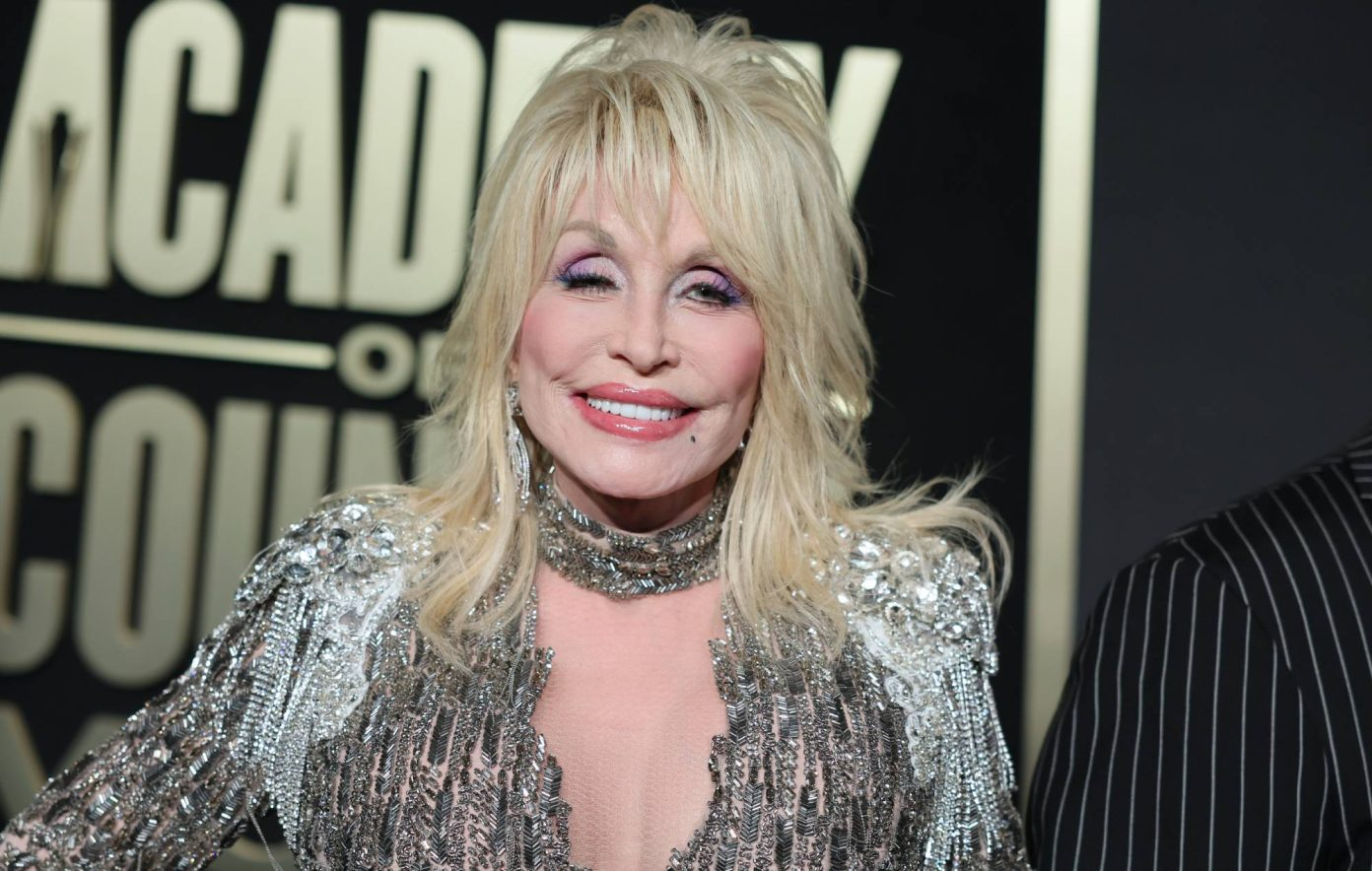
The estate of Dolly Parton has revealed the first major public celebrations dedicated to the late superstar’s life and musical legacy. Titled “DollyFest: The Celebration of a Lifetime,” the events will be held in Nashville and London on consecutive weekends in 2027.
Exact dates for the two day festivals have not yet been confirmed. According to the estate, a Nashville edition of DollyFest had originally been arranged for January 2027 with Parton involved. That event will now proceed as a tribute to her, while another celebration has been added in London.
For many fans, DollyFest could serve as the nearest equivalent to a public memorial. Danny Nozell, Parton’s longtime business partner and the founder and CEO of CTK Enterprises, explained in a statement that “as far as a traditional memorial goes, that is not something Dolly wanted.”
The festival announcement states that “what was originally planned as a multi-artist event for January 2026 in Nashville and intended to feature Parton as performer and host will now morph into a global double-day, double-weekend, double-continent party of a lifetime.”
Nozell explained that the initial idea was to stage the celebration on Parton’s birthday on Jan. 19. “What Dolly started, we will ensure is brought to life. Many people behind the scenes know that DollyFest is a dream of Dolly’s that was intended to take place on her 80th birthday in Nashville. We had the venue booked and we had the announcement ready to go. And then, in August 2025, Dolly had to take a step back after her initial health challenges. A lot of people always say, WWDD (What Would Dolly Do?), and, well, at this moment, DollyFest is WDWD (What Dolly Would Do!).”
Nozell indicated that the estate does not intend to interfere with the numerous tributes and memorials expected to take place this fall. However, DollyFest will stand as the estate’s official celebration of Parton’s life, reflecting the belief that she would have preferred to be remembered through a joyful festival instead of a more sombre public ceremony.
“We are not discouraging people from celebrating Dolly in the ways they choose,” he said. “However, as far as a traditional memorial goes, that is not something Dolly wanted. So, instead, it feels more appropriate for us to take a beat, let all the tributes that immediately make sense occur naturally, and then, see through this festival-style concept that was truly dreamed up by Dolly. This is something that is authentic to her, something that feels right to me, and something that artists and fans around the world can participate in, while also giving everyone time to grieve, and giving everyone time to plan.”
The estate confirmed that further information about both festivals will be shared soon.
Share
Advertisement